
HDAC1 (YD35600) Rabbit mAb (Cat.#:AYD16567)
小A
Sales advisor

Scan with WeChat to add an advisor
Cat.#:AYD16567
| Size | Price | |
|---|---|---|
| 50ul | RMB: 680Sale1280 | Add to cart |
| 100ul | RMB: 1219Sale2300 | Add to cart |
Sales Terms | Request COA | Stock and shipping are confirmed by support
Information
Application guide
Related products
Immunogen
Target data
Resources
Protocols
FAQs
| Reactivity | Human, Mouse, Rat |
|---|---|
| Host | Rabbit |
| Clonality | Monoclonal |
| Isotype | IgG |
| Application | WBIHC-PICC/IFFCIP |
| Dilution | |
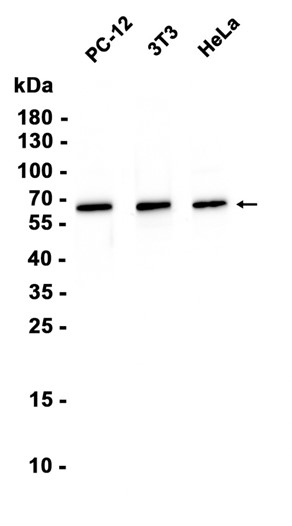
| Predicted MW | 55kDa/55kDa/55kDa |
| Observed MW | |
| Format | Liquid |
| Storage | Store at -20℃. Avoid freeze / thaw cycles. Buffer: PBS with 0.75% BSA,50% glycerol,pH7.3. |
| Conjugate | Unconjugated |
| Positive | 293T,HeLa,HepG2,MCF7,Mouse thymus,Mouse testis,Rat thymus,Rat testis |
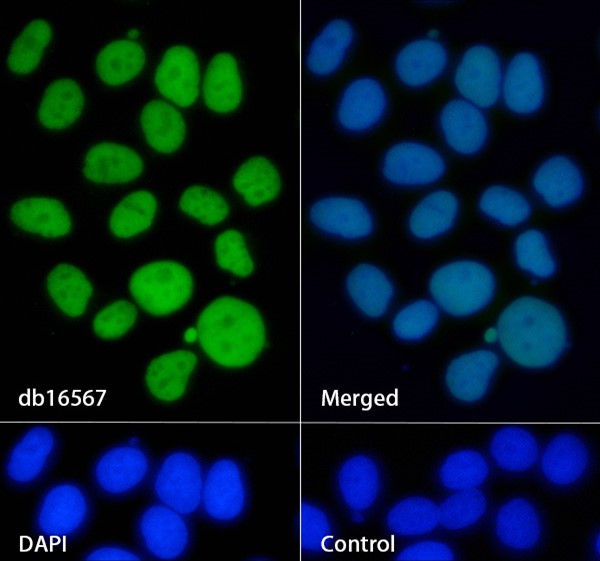
| Subcellular | Nucleus |
| Purification | 亲和纯化 |
Applications and conditions
These starting conditions come from the recommended dilution, validation images, and general assay practice. Titrate for your sample and detection system.
| Recommended dilution | See the validation images or contact technical support |
|---|---|
| Suggested sample / positive control | 293T,HeLa,HepG2,MCF7,Mouse thymus,Mouse testis,Rat thymus,Rat testis |
| Key conditions | Use a fresh lysate, incubate at the recommended dilution, and check the predicted and observed molecular weight |
| Expected result | Expected signal or band near 55kDa/55kDa/55kDa |
| Controls | Include a positive sample, a negative sample, and a secondary or isotype control |
| Recommended dilution | See the validation images or contact technical support |
|---|---|
| Suggested sample / positive control | 293T,HeLa,HepG2,MCF7,Mouse thymus,Mouse testis,Rat thymus,Rat testis |
| Key conditions | For paraffin sections, optimize retrieval buffer pH, retrieval time, and primary incubation |
| Expected result | Expected localization: Nucleus |
| Controls | Include a positive sample, a negative sample, and a secondary or isotype control |
| Recommended dilution | See the validation images or contact technical support |
|---|---|
| Suggested sample / positive control | 293T,HeLa,HepG2,MCF7,Mouse thymus,Mouse testis,Rat thymus,Rat testis |
| Key conditions | Optimize fixation, permeabilization, and blocking, and include a secondary-only control |
| Expected result | Expected fluorescence localization: Nucleus |
| Controls | Include a positive sample, a negative sample, and a secondary or isotype control |
| Recommended dilution | See the validation images or contact technical support |
|---|---|
| Suggested sample / positive control | 293T,HeLa,HepG2,MCF7,Mouse thymus,Mouse testis,Rat thymus,Rat testis |
| Key conditions | For intracellular targets, optimize fixation and permeabilization, and include an isotype control |
| Expected result | Expect the positive population to shift relative to the negative or isotype control |
| Controls | Include a positive sample, a negative sample, and a secondary or isotype control |
| Recommended dilution | See the validation images or contact technical support |
|---|---|
| Suggested sample / positive control | 293T,HeLa,HepG2,MCF7,Mouse thymus,Mouse testis,Rat thymus,Rat testis |
| Key conditions | Start at the recommended dilution and titrate for your sample and assay |
| Expected result | Expected signal or band near 55kDa/55kDa/55kDa |
| Controls | Include a positive sample, a negative sample, and a secondary or isotype control |
Related products
More associated products >>


Immunogen
| Immunogen | Please contact Support |
|---|---|
| Sequence | Request sequence |
Target data
| Background | Histone deacetylase that catalyzes the deacetylation of lysine residues on the N-terminal part of the core histones (H2A, H2B, H3 and H4) (PubMed:16762839, PubMed:17704056, PubMed:28497810). Histone deacetylation gives a tag for epigenetic repression and plays an important role in transcriptional regulation, cell cycle progression and developmental events (PubMed:16762839, PubMed:17704056). Histone deacetylases act via the formation of large multiprotein complexes (PubMed:16762839, PubMed:17704056). Acts as a component of the histone deacetylase NuRD complex which participates in the remodeling of chromatin (PubMed:16428440, PubMed:28977666). As part of the SIN3B complex is recruited downstream of the constitutively active genes transcriptional start sites through interaction with histones and mitigates histone acetylation and RNA polymerase II progression within transcribed regions contributing to the regulation of transcription (PubMed:21041482). Also functions as a deacetylase for non-histone targets, such as NR1D2, RELA, SP1, SP3, STAT3, ZNF76 and TSHZ3 (PubMed:12837748, PubMed:16285960, PubMed:16337145, PubMed:16478997, PubMed:17996965, PubMed:19343227). Deacetylates SP proteins, SP1 and SP3, and regulates their function (PubMed:12837748, PubMed:16478997). Component of the BRG1-RB1-HDAC1 complex, which negatively regulates the CREST-mediated transcription in resting neurons (PubMed:19081374). Upon calcium stimulation, HDAC1 is released from the complex and CREBBP is recruited, which facilitates transcriptional activation (PubMed:19081374). Deacetylates TSHZ3 and regulates its transcriptional repressor activity (PubMed:19343227). Deacetylates 'Lys-310' in RELA and thereby inhibits the transcriptional activity of NF-kappa-B (PubMed:17000776). Deacetylates NR1D2 and abrogates the effect of KAT5-mediated relieving of NR1D2 transcription repression activity (PubMed:17996965). Component of a RCOR/GFI/KDM1A/HDAC complex that suppresses, via histone deacetylase (HDAC) recruitment, a number of genes implicated in multilineage blood cell development (By similarity). Involved in CIART-mediated transcriptional repression of the circadian transcriptional activator: CLOCK-BMAL1 heterodimer (By similarity). Required for the transcriptional repression of circadian target genes, such as PER1, mediated by the large PER complex or CRY1 through histone deacetylation (By similarity). In addition to protein deacetylase activity, also has protein-lysine deacylase activity: acts as a protein decrotonylase and delactylase by mediating decrotonylation ((2E)-butenoyl) and delactylation (lactoyl) of histones, respectively (PubMed:28497810, PubMed:35044827) Histone deacetylase that catalyzes the deacetylation of lysine residues on the N-terminal part of the core histones (H2A, H2B, H3 and H4) (PubMed:10615135, PubMed:15542849, PubMed:21960634, PubMed:30279482). Histone deacetylation gives a tag for epigenetic repression and plays an important role in transcriptional regulation, cell cycle progression and developmental events (PubMed:10615135, PubMed:15542849, PubMed:21960634). Histone deacetylases act via the formation of large multiprotein complexes (PubMed:10615135, PubMed:21960634). Acts as a component of the histone deacetylase NuRD complex which participates in the remodeling of chromatin (By similarity). As part of the SIN3B complex is recruited downstream of the constitutively active genes transcriptional start sites through interaction with histones and mitigates histone acetylation and RNA polymerase II progression within transcribed regions contributing to the regulation of transcription (By similarity). Also functions as a deacetylase for non-histone targets, such as NR1D2, RELA, SP1, SP3, STAT3, ZNF76 and TSHZ3 (By similarity). Deacetylates SP proteins, SP1 and SP3, and regulates their function (By similarity). Component of the BRG1-RB1-HDAC1 complex, which negatively regulates the CREST-mediated transcription in resting neurons (By similarity). Upon calcium stimulation, HDAC1 is released from the complex and CREBBP is recruited, which facilitates transcriptional activation (By similarity). Deacetylates TSHZ3 and regulates its transcriptional repressor activity (By similarity). Deacetylates 'Lys-310' in RELA and thereby inhibits the transcriptional activity of NF-kappa-B (By similarity). Deacetylates NR1D2 and abrogates the effect of KAT5-mediated relieving of NR1D2 transcription repression activity (By similarity). Component of a RCOR/GFI/KDM1A/HDAC complex that suppresses, via histone deacetylase (HDAC) recruitment, a number of genes implicated in multilineage blood cell development (PubMed:17707228). Involved in CIART-mediated transcriptional repression of the circadian transcriptional activator: CLOCK-BMAL1 heterodimer (PubMed:15226430, PubMed:24736997). Required for the transcriptional repression of circadian target genes, such as PER1, mediated by the large PER complex or CRY1 through histone deacetylation (PubMed:15226430). In addition to protein deacetylase activity, also has protein-lysine deacylase activity: acts as a protein decrotonylase and delactylase by mediating decrotonylation ((2E)-butenoyl) and delactylation (lactoyl) of histones, respectively (PubMed:30279482) Histone deacetylase that catalyzes the deacetylation of lysine residues on the N-terminal part of the core histones (H2A, H2B, H3 and H4). Histone deacetylation gives a tag for epigenetic repression and plays an important role in transcriptional regulation, cell cycle progression and developmental events. Histone deacetylases act via the formation of large multiprotein complexes (By similarity). Acts as a component of the histone deacetylase NuRD complex which participates in the remodeling of chromatin (By similarity). As part of the SIN3B complex is recruited downstream of the constitutively active genes transcriptional start sites through interaction with histones and mitigates histone acetylation and RNA polymerase II progression within transcribed regions contributing to the regulation of transcription (By similarity). Also functions as a deacetylase for non-histone targets, such as NR1D2, RELA, SP1, SP3, STAT3, ZNF76 and TSHZ3 (By similarity). Deacetylates SP proteins, SP1 and SP3, and regulates their function (By similarity). Component of the BRG1-RB1-HDAC1 complex, which negatively regulates the CREST-mediated transcription in resting neurons (By similarity). Upon calcium stimulation, HDAC1 is released from the complex and CREBBP is recruited, which facilitates transcriptional activation (By similarity). Deacetylates TSHZ3 and regulates its transcriptional repressor activity (By similarity). Deacetylates 'Lys-310' in RELA and thereby inhibits the transcriptional activity of NF-kappa-B (By similarity). Deacetylates NR1D2 and abrogates the effect of KAT5-mediated relieving of NR1D2 transcription repression activity (By similarity). Component of a RCOR/GFI/KDM1A/HDAC complex that suppresses, via histone deacetylase (HDAC) recruitment, a number of genes implicated in multilineage blood cell development. Involved in CIART-mediated transcriptional repression of the circadian transcriptional activator: CLOCK-BMAL1 heterodimer. Required for the transcriptional repression of circadian target genes, such as PER1, mediated by the large PER complex or CRY1 through histone deacetylation. In addition to protein deacetylase activity, also has protein-lysine deacylase activity: acts as a protein decrotonylase and delactylase by mediating decrotonylation ((2E)-butenoyl) and delactylation (lactoyl) of histones, respectively (By similarity) |
|---|---|
| Gene ID | 3065 |
| Gene name | HDAC1, Hdac1 |
| Swiss | Q13547, O09106, Q4QQW4 |
| Synonym | HDAC1 (YD35600),HDAC1 (YD35600) Rabbit mAb,HDAC1,Protein deacetylase HDAC1,Protein deacylase HDAC1,RPD3L1 |
Resources
Validation data
2 images
Validation images at the top of the page cover WB / IHC-P / ICC/IF / FC / IP.
References
No papers are linked yet. Contact technical support for application examples.
Ask for examplesCustomer reviews
No reviews yet. After use, you can submit a review and experiment images.
Send feedbackSupport
Support can help confirm the application, sample, dilution, controls, and assay conditions.
Support centerSend the catalog number, application, sample type, and assay. Support can confirm dilution, controls, and COA or lot documents.