
ALOX15 (YD18597) Rabbit mAb (Cat.#:AYD11148)
小A
Sales advisor

Scan with WeChat to add an advisor
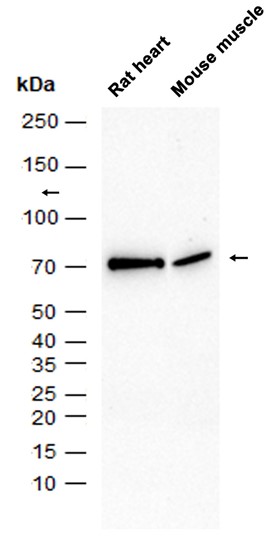
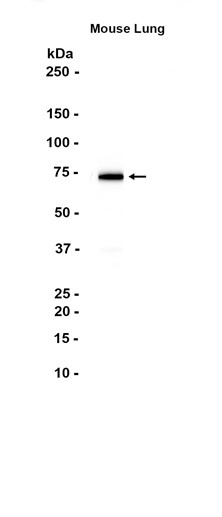
Western blot analysis of extracts from Rat heart, Mouse muscle tissues using AYD11148 at 1:1000.
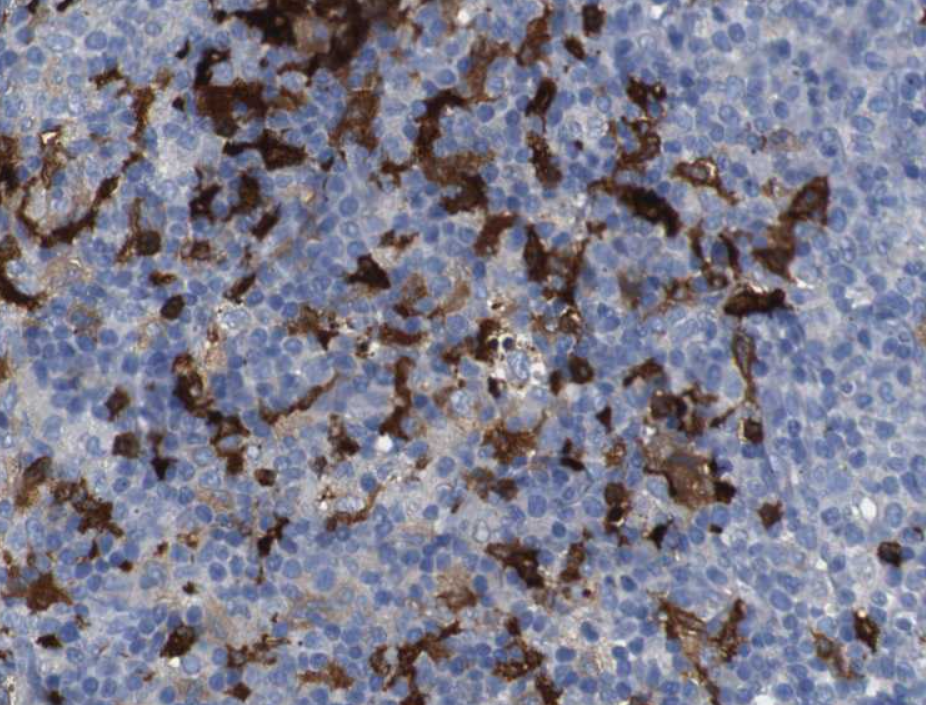
Human Lymph node was stained with anti-PAHO (PT2128R) Rabbit antibody,1:200
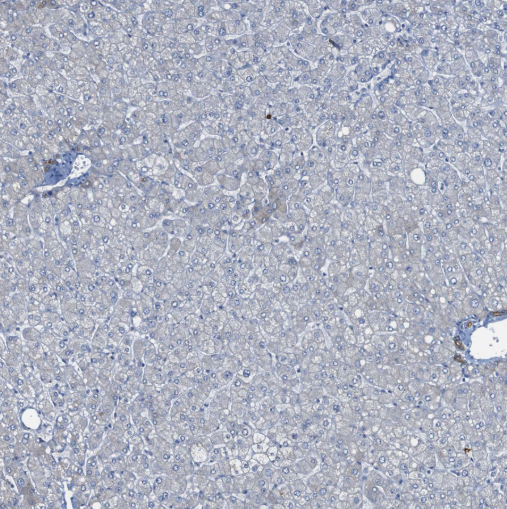
Human Liver was stained with anti-ALOX15 Rabbit antibody,1:200
The samples were fixed with PFA and permeabilized in 0.1% Triton X-100,then blocked in 10% serum for 45 minutes at 25°C. Samples were then incubated with primary Ab ALOX15 for 1 hour at 37°C. An AlexaFluor594 conjugated goat anti-rabbit IgG(H+L) Ab(Red) and an AlexaFluor488 conjugated goat.The nuclear counter stain is DAPI.
Preview
AYD11148-wb1
Western blot analysis of extracts from Rat heart, Mouse muscle tissues using AYD11148 at 1:1000.
AYD11148-wb2
ALOX15 (YD18597) Rabbit mAb
Human Lymph node was stained with anti-PAHO (PT2128R) Rabbit antibody,1:200
ALOX15 (YD18597) Rabbit mAb
Human Liver was stained with anti-ALOX15 Rabbit antibody,1:200
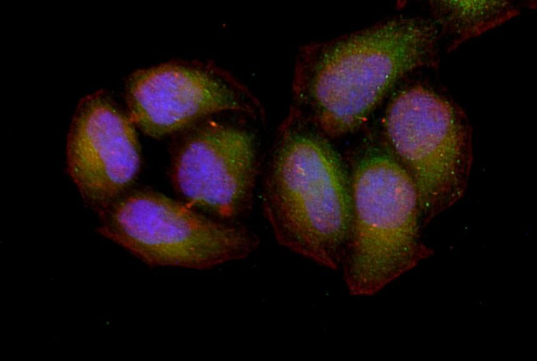
ALOX15 (YD18597) Rabbit mAb,staining hela cells
The samples were fixed with PFA and permeabilized in 0.1% Triton X-100,then blocked in 10% serum for 45 minutes at 25°C. Samples were then incubated with primary Ab ALOX15 for 1 hour at 37°C. An AlexaFluor594 conjugated goat anti-rabbit IgG(H+L) Ab(Red) and an AlexaFluor488 conjugated goat.The nuclear counter stain is DAPI.
Cat.#:AYD11148
| Size | Price | |
|---|---|---|
| 50ul | RMB: 680Sale1280 | Add to cart |
| 100ul | RMB: 1219Sale2300 | Add to cart |
Sales Terms | Request COA | Stock and shipping are confirmed by support
Information
Application guide
Related products
Immunogen
Target data
Resources
Protocols
FAQs
| Reactivity | Human,Mouse,Rat |
|---|---|
| Host | Rabbit |
| Clonality | Monoclonal |
| Isotype | IgG |
| Application | WBIHCICC |
| Dilution | WB: 1:1000-1:3000: IHC-P: 1:200-1:1000: ICC/IF: 1:50-1:300: |
| Predicted MW | 75kDa/75kDa/75kDa |
| Observed MW | 75 kDa |
| Format | Liquid |
| Storage | Store at -20℃. Avoid freeze / thaw cycles. Buffer: PBS with 0.75% BSA,50% glycerol,pH7.3. |
| Conjugate | Unconjugated |
| Positive | Monocyte,Eosinophil |
| Subcellular | Cytoplasm, cytosol, Cell membrane, Lipid droplet |
| Purification | 亲和纯化 |
Applications and conditions
These starting conditions come from the recommended dilution, validation images, and general assay practice. Titrate for your sample and detection system.
| Recommended dilution | See the validation images or contact technical support |
|---|---|
| Suggested sample / positive control | Monocyte,Eosinophil |
| Key conditions | Use a fresh lysate, incubate at the recommended dilution, and check the predicted and observed molecular weight |
| Expected result | Expected signal or band near 75 kDa |
| Controls | Include a positive sample, a negative sample, and a secondary or isotype control |
| Recommended dilution | See the validation images or contact technical support |
|---|---|
| Suggested sample / positive control | Monocyte,Eosinophil |
| Key conditions | For paraffin sections, optimize retrieval buffer pH, retrieval time, and primary incubation |
| Expected result | Expected localization: Cytoplasm, cytosol, Cell membrane, Lipid droplet |
| Controls | Include a positive sample, a negative sample, and a secondary or isotype control |
| Recommended dilution | See the validation images or contact technical support |
|---|---|
| Suggested sample / positive control | Monocyte,Eosinophil |
| Key conditions | Optimize fixation, permeabilization, and blocking, and include a secondary-only control |
| Expected result | Expected fluorescence localization: Cytoplasm, cytosol, Cell membrane, Lipid droplet |
| Controls | Include a positive sample, a negative sample, and a secondary or isotype control |
Related products
More associated products >>
Immunogen
| Immunogen | Please contact Support |
|---|---|
| Sequence | Request sequence |
Target data
| Background | Non-heme iron-containing dioxygenase that catalyzes the stereo-specific peroxidation of free and esterified polyunsaturated fatty acids generating a spectrum of bioactive lipid mediators (PubMed:17052953, PubMed:1944593, PubMed:24282679, PubMed:25293588, PubMed:32404334, PubMed:8334154). It inserts peroxyl groups at C12 or C15 of arachidonate ((5Z,8Z,11Z,14Z)-eicosatetraenoate) producing both 12-hydroperoxyeicosatetraenoate/12-HPETE and 15-hydroperoxyeicosatetraenoate/15-HPETE (PubMed:17052953, PubMed:1944593, PubMed:24282679, PubMed:8334154). It may then act on 12-HPETE to produce hepoxilins, which may show pro-inflammatory properties (By similarity). Can also peroxidize linoleate ((9Z,12Z)-octadecadienoate) to 13-hydroperoxyoctadecadienoate/13-HPODE (PubMed:8334154). May participate in the sequential oxidations of DHA ((4Z,7Z,10Z,13Z,16Z,19Z)-docosahexaenoate) to generate specialized pro-resolving mediators (SPMs)like resolvin D5 ((7S,17S)-diHPDHA) and (7S,14S)-diHPDHA, that actively down-regulate the immune response and have anti-aggregation properties with platelets (PubMed:32404334). Can convert epoxy fatty acids to hydroperoxy-epoxides derivatives followed by an intramolecular nucleophilic substitution leading to the formation of monocyclic endoperoxides (PubMed:25293588). Plays an important role during the maintenance of self-tolerance by peroxidizing membrane-bound phosphatidylethanolamine which can then signal the sorting process for clearance of apoptotic cells during inflammation and prevent an autoimmune response. In addition to its role in the immune and inflammatory responses, this enzyme may play a role in epithelial wound healing in the cornea through production of lipoxin A4 (LXA(4)) and docosahexaenoic acid-derived neuroprotectin D1 (NPD1; 10R,17S-HDHA), both lipid autacoids exhibit anti-inflammatory and neuroprotective properties. Furthermore, it may regulate actin polymerization which is crucial for several biological processes such as the phagocytosis of apoptotic cells. It is also implicated in the generation of endogenous ligands for peroxisome proliferator activated receptor (PPAR-gamma), hence modulating macrophage development and function. It may also exert a negative effect on skeletal development by regulating bone mass through this pathway. As well as participates in ER stress and downstream inflammation in adipocytes, pancreatic islets, and liver (By similarity). Finally, it is also involved in the cellular response to IL13/interleukin-13 (PubMed:21831839) Non-heme iron-containing dioxygenase that catalyzes the stereo-specific peroxidation of free and esterified polyunsaturated fatty acids generating a spectrum of bioactive lipid mediators (PubMed:8188678). It inserts peroxyl groups at C12 or C15 of arachidonate ((5Z,8Z,11Z,14Z)-eicosatetraenoate) producing both 12-hydroperoxyeicosatetraenoate/12-HPETE and 15-hydroperoxyeicosatetraenoate/15-HPETE (PubMed:8188678). It may then act on 12-HPETE to produce hepoxilins, which may show pro-inflammatory properties (By similarity). Can also peroxidize linoleate ((9Z,12Z)-octadecadienoate) to 13-hydroperoxyoctadecadienoate. May participate in the sequential oxidations of DHA ((4Z,7Z,10Z,13Z,16Z,19Z)-docosahexaenoate) to generate specialized pro-resolving mediators (SPMs)like resolvin D5 ((7S,17S)-diHPDHA) and (7S,14S)-diHPDHA, that actively down-regulate the immune response and have anti-aggregation properties with platelets. Can convert epoxy fatty acids to hydroperoxy-epoxides derivatives followed by an intramolecular nucleophilic substitution leading to the formation of monocyclic endoperoxides (By similarity). Plays an important role during the maintenance of self-tolerance by peroxidizing membrane-bound phosphatidylethanolamine which can then signal the sorting process for clearance of apoptotic cells during inflammation and prevent an autoimmune response (PubMed:22503541). In addition to its role in the immune and inflammatory responses, this enzyme may play a role in epithelial wound healing in the cornea through production of lipoxin A4 (LXA(4)) and docosahexaenoic acid-derived neuroprotectin D1 (NPD1; 10R,17S-HDHA), both lipid autacoids exhibit anti-inflammatory and neuroprotective properties (PubMed:15708862). Furthermore, it may regulate actin polymerization which is crucial for several biological processes such as the phagocytosis of apoptotic cells (PubMed:11278875). It is also implicated in the generation of endogenous ligands for peroxisome proliferator activated receptor (PPAR-gamma), hence modulating macrophage development and function (PubMed:10432118). It may also exert a negative effect on skeletal development by regulating bone mass through this pathway (PubMed:14716014). As well as participates in ER stress and downstream inflammation in adipocytes, pancreatic islets, and liver (PubMed:22215650). Finally, it is also involved in the cellular response to IL13/interleukin-13 (By similarity) Non-heme iron-containing dioxygenase that catalyzes the stereo-specific peroxidation of free and esterified polyunsaturated fatty acids generating a spectrum of bioactive lipid mediators (PubMed:15123652, PubMed:23382512, PubMed:8117750, PubMed:8444196). It inserts peroxyl groups at C12 or C15 of arachidonate ((5Z,8Z,11Z,14Z)-eicosatetraenoate) producing both 12-hydroperoxyeicosatetraenoate/12-HPETE and 15-hydroperoxyeicosatetraenoate/15-HPETE (PubMed:15123652, PubMed:23382512, PubMed:8117750, PubMed:8444196). It may then act on 12-HPETE to produce hepoxilins, which may show pro-inflammatory properties (PubMed:15123652, PubMed:23382512). Can also peroxidize linoleate ((9Z,12Z)-octadecadienoate) to 13-hydroperoxyoctadecadienoate. May participate in the sequential oxidations of DHA ((4Z,7Z,10Z,13Z,16Z,19Z)-docosahexaenoate) to generate specialized pro-resolving mediators (SPMs)like resolvin D5 ((7S,17S)-diHPDHA) and (7S,14S)-diHPDHA, that actively down-regulate the immune response and have anti-aggregation properties with platelets. Can convert epoxy fatty acids to hydroperoxy-epoxides derivatives followed by an intramolecular nucleophilic substitution leading to the formation of monocyclic endoperoxides (By similarity). Plays an important role during the maintenance of self-tolerance by peroxidizing membrane-bound phosphatidylethanolamine which can then signal the sorting process for clearance of apoptotic cells during inflammation and prevent an autoimmune response. In addition to its role in the immune and inflammatory responses, this enzyme may play a role in epithelial wound healing in the cornea through production of lipoxin A4 (LXA(4)) and docosahexaenoic acid-derived neuroprotectin D1 (NPD1; 10R,17S-HDHA), both lipid autacoids exhibit anti-inflammatory and neuroprotective properties. Furthermore, it may regulate actin polymerization which is crucial for several biological processes such as the phagocytosis of apoptotic cells. It is also implicated in the generation of endogenous ligands for peroxisome proliferator activated receptor (PPAR-gamma), hence modulating macrophage development and function. It may also exert a negative effect on skeletal development by regulating bone mass through this pathway. As well as participates in ER stress and downstream inflammation in adipocytes, pancreatic islets, and liver (By similarity). Finally, it is also involved in the cellular response to IL13/interleukin-13 (By similarity) |
|---|---|
| Gene ID | 246 |
| Gene name | ALOX15, Alox15 |
| Swiss | P16050, P39654, Q02759 |
| Synonym | ALOX15 (YD18597),ALOX15 (YD18597) Rabbit mAb,ALOX15,12/15-lipoxygenase,Arachidonate 12-lipoxygenase,leukocyte-type,Arachidonate 15-lipoxygenase,Arachidonate omega-6 lipoxygenase,Hepoxilin A3 synthase Alox15,Linoleate 13S-lipoxygenase,LOG15,Alox12l |
Resources
Validation data
5 images
Validation images at the top of the page cover WB / IHC / ICC.
References
No papers are linked yet. Contact technical support for application examples.
Ask for examplesCustomer reviews
No reviews yet. After use, you can submit a review and experiment images.
Send feedbackSupport
Support can help confirm the application, sample, dilution, controls, and assay conditions.
Support centerSend the catalog number, application, sample type, and assay. Support can confirm dilution, controls, and COA or lot documents.