
CDK5 Rabbit mAb (货号:AYM30793)
小A
销售顾问

请使用微信扫一扫
添加顾问进行咨询
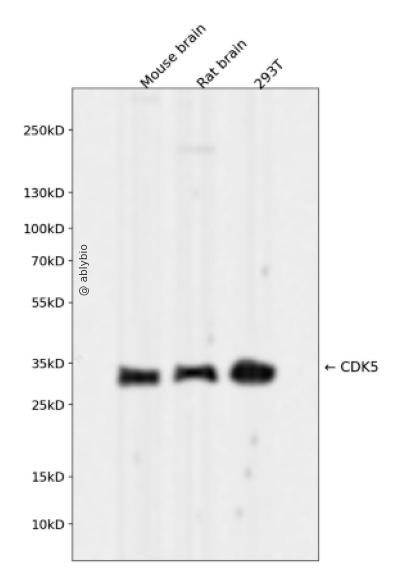
Western blot analysis of CDK5 expressed in Mouse brain,Rat brain,293T using CDK5 Rabbit mAb at 1:1000. Secondary antibody: HRP Goat Anti-Rabbit IgG (H+L) at 1:5000. Lysates/proteins: 30ug per lane. Blocking buffer: 5% non-fat dry milk in TBST. Detection: ECL Enhanced Kit. Exposure time: 120s.
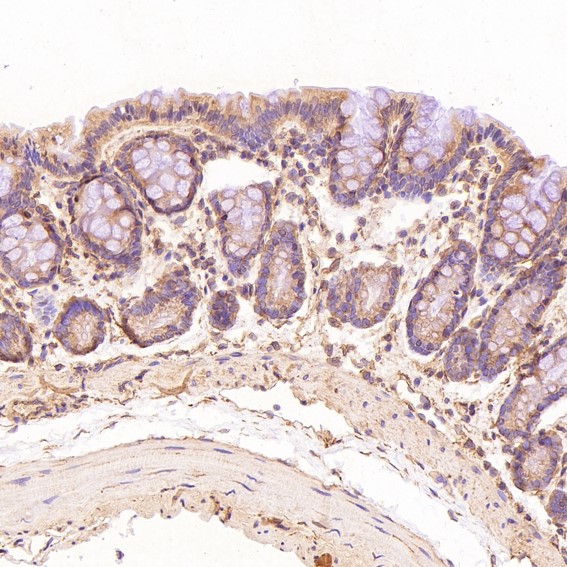
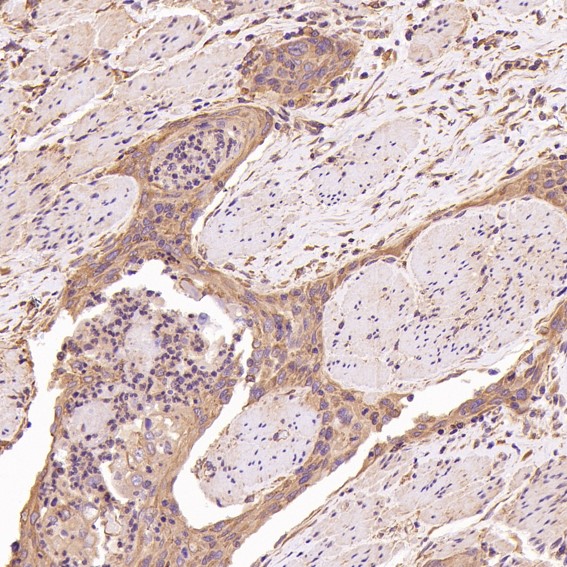
Immunohistochemical analysis of paraffin-embedded Rat stomach, using the Antibody at 1:200 dilution.
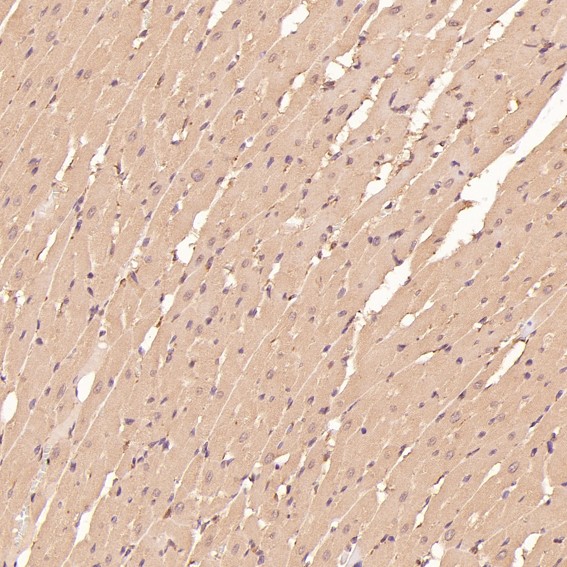
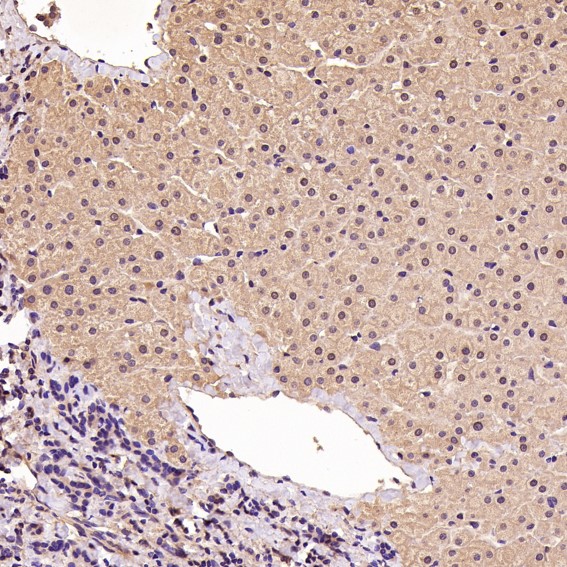
Immunohistochemical analysis of paraffin-embedded Rat heart, using the Antibody at 1:200 dilution.
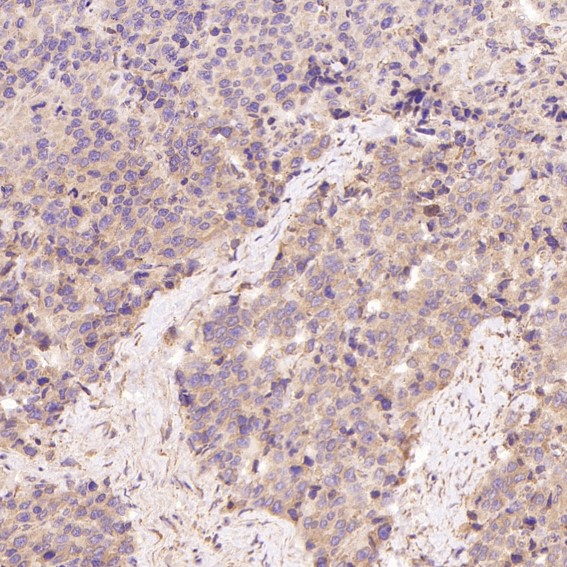
Immunohistochemical analysis of paraffin-embedded Human prostate cancer, using the Antibody at 1:200 dilution.
Immunohistochemical analysis of paraffin-embedded Human esophageal carcinoma, using the Antibody at 1:200 dilution.
Immunohistochemical analysis of paraffin-embedded Human stomach, using the Antibody at 1:200 dilution.
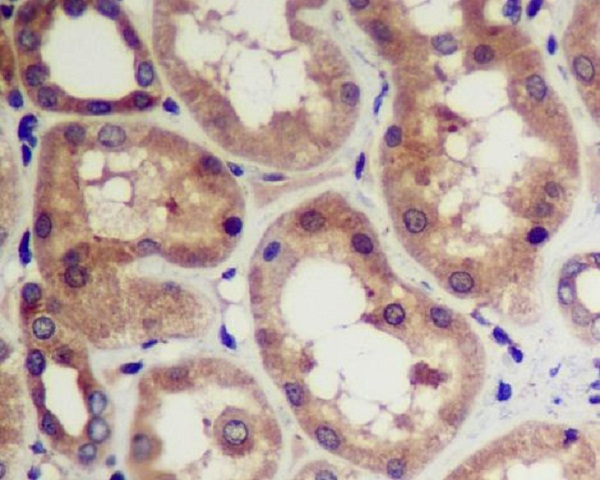
Immunohistochemical analysis of paraffin-embedded human kidney, using CDK5 Antibody .
预览
Western blot - CDK5 Rabbit mAb
Western blot analysis of CDK5 expressed in Mouse brain,Rat brain,293T using CDK5 Rabbit mAb at 1:1000. Secondary antibody: HRP Goat Anti-Rabbit IgG (H+L) at 1:5000. Lysates/proteins: 30ug per lane. Blocking buffer: 5% non-fat dry milk in TBST. Detection: ECL Enhanced Kit. Exposure time: 120s.
Immunohistochemistry - CDK5 Rabbit mAb
Immunohistochemical analysis of paraffin-embedded Rat stomach, using the Antibody at 1:200 dilution.
Immunohistochemistry - CDK5 Rabbit mAb
Immunohistochemical analysis of paraffin-embedded Rat heart, using the Antibody at 1:200 dilution.
Immunohistochemistry - CDK5 Rabbit mAb
Immunohistochemical analysis of paraffin-embedded Human prostate cancer, using the Antibody at 1:200 dilution.
Immunohistochemistry - CDK5 Rabbit mAb
Immunohistochemical analysis of paraffin-embedded Human esophageal carcinoma, using the Antibody at 1:200 dilution.
Immunohistochemistry - CDK5 Rabbit mAb
Immunohistochemical analysis of paraffin-embedded Human stomach, using the Antibody at 1:200 dilution.
Immunohistochemistry - CDK5 Rabbit mAb
Immunohistochemical analysis of paraffin-embedded human kidney, using CDK5 Antibody .
产品信息
应用指南
相关产品
抗原信息
靶点信息
资料与支持
实验步骤
常见问题
| 反应 | Human,Mouse,Rat |
|---|---|
| 宿主 | Rabbit |
| 克隆性 | Monoclonal |
| 同种型 | IgG |
| 应用 | WBIHCIPFC |
| 推荐浓度 | WB: 1:500 - 1:2000 IHC: 1:50 - 1:200 IP: 1:20 - 1:50 FC: 1:20 - 1:50 |
| 理论分子量 | 29kDa/33kDa |
| 实测分子量 | 33kDa |
| 形式 | Liquid |
| 保存条件 | Store at -20℃. Avoid freeze / thaw cycles. Buffer: PBS with 0.75% BSA,50% glycerol,pH7.3. |
| 偶联物 | Unconjugated |
| 阳性对照 | 293T,HepG2,BT-474,A-549,PC-12,Mouse brain,Rat brain |
| 细胞定位 | Cell junction,Cell membrane,Cell projection,Cytoplasm,Nucleus,Perikaryon,Peripheral membrane protein,growth cone,lamellipodium,postsynaptic cell membrane,postsynaptic density,synapse |
| 纯化 | Affinity purification |
应用与推荐条件
以下条件基于推荐浓度、验证图说明与通用实验要求整理,可作为预实验起点;不同样本和检测体系建议做梯度优化。
| 推荐稀释 | 1:500 - 1:2000 |
|---|---|
| 建议样本/阳性对照 | 293T,HepG2,BT-474,A-549,PC-12,Mouse brain,Rat brain |
| 关键条件 | 建议使用新鲜裂解样本,按推荐稀释比例孵育一抗,并关注理论/实测分子量 |
| 预期结果 | 预期信号/条带约 33kDa |
| 对照设置 | 建议设置阳性样本、阴性样本和二抗/同型对照 |
| 推荐稀释 | 1:50 - 1:200 |
|---|---|
| 建议样本/阳性对照 | 293T,HepG2,BT-474,A-549,PC-12,Mouse brain,Rat brain |
| 关键条件 | 石蜡切片建议优化抗原修复液 pH、修复时间和一抗孵育条件 |
| 预期结果 | 预期定位:Cell junction,Cell membrane,Cell projection,Cytoplasm,Nucleus,Perikaryon,Peripheral membrane protein,growth cone,lamellipodium,postsynaptic cell membrane,postsynaptic density,synapse |
| 对照设置 | 建议设置阳性样本、阴性样本和二抗/同型对照 |
| 推荐稀释 | 1:20 - 1:50 |
|---|---|
| 建议样本/阳性对照 | 293T,HepG2,BT-474,A-549,PC-12,Mouse brain,Rat brain |
| 关键条件 | 建议从页面推荐浓度开始,结合样本与检测体系做梯度优化 |
| 预期结果 | 预期信号/条带约 33kDa |
| 对照设置 | 建议设置阳性样本、阴性样本和二抗/同型对照 |
| 推荐稀释 | 1:20 - 1:50 |
|---|---|
| 建议样本/阳性对照 | 293T,HepG2,BT-474,A-549,PC-12,Mouse brain,Rat brain |
| 关键条件 | 如检测胞内靶点,需优化固定/通透条件,并设置同型对照 |
| 预期结果 | 预期阳性群体荧光信号相对阴性/同型对照右移 |
| 对照设置 | 建议设置阳性样本、阴性样本和二抗/同型对照 |
相关产品
查找相关产品 >>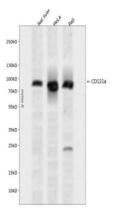
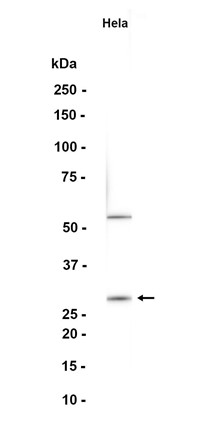
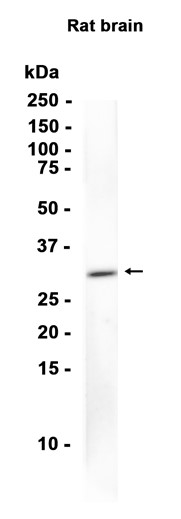
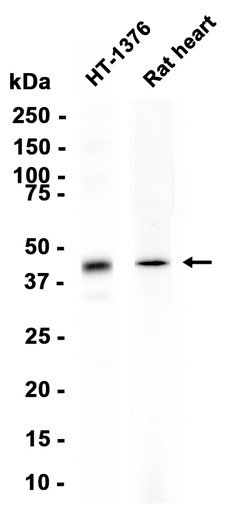
抗原信息
| 抗原信息 | Recombinant fusion protein corresponding to Human CDK5 . |
|---|---|
| 序列 |
查看序列PDVLFGAKLYSTSIDMWSAGCIFAELANAGRPLFPGNDVDDQLKRIFRLLGTPTEEQWPSMTKLPDYKPYPMYPATTSLVNVVPKLNATGRDLLQNLLKCNPVQRISAEEALQHPYFSDF |
靶点信息
| 研究背景 | This gene encodes a proline-directed serine/threonine kinase that is a member of the cyclin-dependent kinase family of proteins. Unlike other members of the family, the protein encoded by this gene does not directly control cell cycle regulation. Instead the protein, which is predominantly expressed at high levels in mammalian postmitotic central nervous system neurons, functions in diverse processes such as synaptic plasticity and neuronal migration through phosphorylation of proteins required for cytoskeletal organization, endocytosis and exocytosis, and apoptosis. In humans, an allelic variant of the gene that results in undetectable levels of the protein has been associated with lethal autosomal recessive lissencephaly-7. Alternative splicing results in multiple transcript variants. |
|---|---|
| 基因 ID | 1020 |
| 基因名 | CDK5 |
| Swiss | Q00535 |
| 别名 | CDK5,CDK5 Rabbit mAb,Cell division protein kinase 5,Cyclin-dependent-like kinase 5,Serine/threonine-protein kinase PSSALRE,Tau protein kinase II catalytic subunit,CDKN5 |
| 组织表达 | [Isoform 1]: Ubiquitously expressed (PubMed:17009320, PubMed:19693690). Accumulates in cortical neurons (at protein level) (PubMed:17009320).; [Isoform 2]: Expressed in the testis, skeletal muscle, colon, bone marrow and ovary. |
| 功能 | Proline-directed serine/threonine-protein kinase essential for neuronal cell cycle arrest and differentiation and may be involved in apoptotic cell death in neuronal diseases by triggering abortive cell cycle re-entry. Interacts with D1 and D3-type G1 cyclins. Phosphorylates SRC, NOS3, VIM/vimentin, p35/CDK5R1, MEF2A, SIPA1L1, SH3GLB1, PXN, PAK1, MCAM/MUC18, SEPT5, SYN1, DNM1, AMPH, SYNJ1, CDK16, RAC1, RHOA, CDC42, TONEBP/NFAT5, MAPT/TAU, MAP1B, histone H1, p53/TP53, HDAC1, APEX1, PTK2/FAK1, huntingtin/HTT, ATM, MAP2, NEFH and NEFM. Regulates several neuronal development and physiological processes including neuronal survival, migration and differentiation, axonal and neurite growth, synaptogenesis, oligodendrocyte differentiation, synaptic plasticity and neurotransmission, by phosphorylating key proteins. Activated by interaction with CDK5R1 (p35) and CDK5R2 (p39), especially in post-mitotic neurons, and promotes CDK5R1 (p35) expression in an autostimulation loop. Phosphorylates many downstream substrates such as Rho and Ras family small GTPases (e.g. PAK1, RAC1, RHOA, CDC42) or microtubule-binding proteins (e.g. MAPT/TAU, MAP2, MAP1B), and modulates actin dynamics to regulate neurite growth and/or spine morphogenesis. Phosphorylates also exocytosis associated proteins such as MCAM/MUC18, SEPT5, SYN1, and CDK16/PCTAIRE1 as well as endocytosis associated proteins such as DNM1, AMPH and SYNJ1 at synaptic terminals. In the mature central nervous system (CNS), regulates neurotransmitter movements by phosphorylating substrates associated with neurotransmitter release and synapse plasticity; synaptic vesicle exocytosis, vesicles fusion with the presynaptic membrane, and endocytosis. Promotes cell survival by activating anti-apoptotic proteins BCL2 and STAT3, and negatively regulating of JNK3/MAPK10 activity. Phosphorylation of p53/TP53 in response to genotoxic and oxidative stresses enhances its stabilization by preventing ubiquitin ligase-mediated proteasomal degradation, and induces transactivation of p53/TP53 target genes, thus regulating apoptosis. Phosphorylation of p35/CDK5R1 enhances its stabilization by preventing calpain-mediated proteolysis producing p25/CDK5R1 and avoiding ubiquitin ligase-mediated proteasomal degradation. During aberrant cell-cycle activity and DNA damage, p25/CDK5 activity elicits cell-cycle activity and double-strand DNA breaks that precedes neuronal death by deregulating HDAC1. DNA damage triggered phosphorylation of huntingtin/HTT in nuclei of neurons protects neurons against polyglutamine expansion as well as DNA damage mediated toxicity. Phosphorylation of PXN reduces its interaction with PTK2/FAK1 in matrix-cell focal adhesions (MCFA) during oligodendrocytes (OLs) differentiation. Negative regulator of Wnt/beta-catenin signaling pathway. Activator of the GAIT (IFN-gamma-activated inhibitor of translation) pathway, which suppresses expression of a post-transcriptional regulon of proinflammatory genes in myeloid cells; phosphorylates the linker domain of glutamyl-prolyl tRNA synthetase (EPRS) in a IFN-gamma-dependent manner, the initial event in assembly of the GAIT complex. Phosphorylation of SH3GLB1 is required for autophagy induction in starved neurons. Phosphorylation of TONEBP/NFAT5 in response to osmotic stress mediates its rapid nuclear localization. MEF2 is inactivated by phosphorylation in nucleus in response to neurotoxin, thus leading to neuronal apoptosis. APEX1 AP-endodeoxyribonuclease is repressed by phosphorylation, resulting in accumulation of DNA damage and contributing to neuronal death. NOS3 phosphorylation down regulates NOS3-derived nitrite (NO) levels. SRC phosphorylation mediates its ubiquitin-dependent degradation and thus leads to cytoskeletal reorganization. May regulate endothelial cell migration and angiogenesis via the modulation of lamellipodia formation. Involved in dendritic spine morphogenesis by mediating the EFNA1-EPHA4 signaling. The complex p35/CDK5 participates in the regulation of the circadian clock by modulating the function of CLOCK protein: phosphorylates CLOCK at 'Thr-451' and 'Thr-461' and regulates the transcriptional activity of the CLOCK-ARNTL/BMAL1 heterodimer in association with altered stability and subcellular distribution. |
| 研究领域 |
|
资料与技术支持
验证数据
7 张验证图
页面顶部轮播可查看应用验证图,覆盖 WB / IHC / IP / FC。