
ALOX15 (YD18597) Rabbit mAb (货号:AYD11148)
A
小A
销售顾问

请使用微信扫一扫
添加顾问进行咨询
货号
AYD11148
靶点/基因
ALOX15/Alox15
宿主
Rabbit
克隆性
Monoclonal
反应种属
Human, Mouse, Rat
应用
WB, IHC-P, ICC/IF
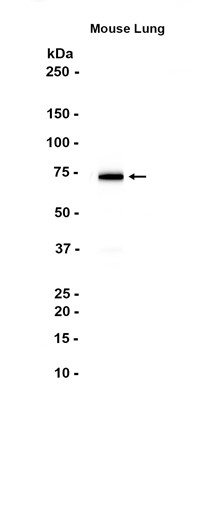
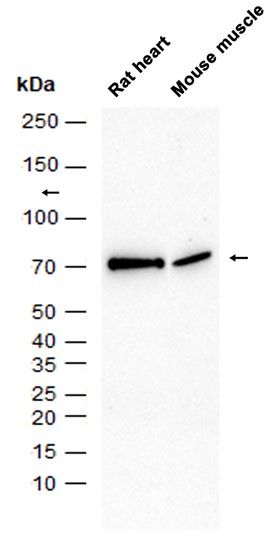
产品信息
应用指南
相关产品
抗原信息
靶点信息
资料与支持
实验步骤
常见问题
| 反应 | Human,Mouse,Rat |
|---|---|
| 宿主 | Rabbit |
| 克隆性 | Monoclonal |
| 同种型 | IgG |
| 应用 | WBIHC-PICC/IF |
| 推荐浓度 | |
| 理论分子量 | 75kDa/75kDa/75kDa |
| 实测分子量 | |
| 形式 | Liquid |
| 保存条件 | Store at -20℃. Avoid freeze / thaw cycles. Buffer: PBS with 0.75% BSA,50% glycerol,pH7.3. |
| 偶联物 | Unconjugated |
| 阳性对照 | |
| 细胞定位 | Cytoplasm, cytosol, Cell membrane, Lipid droplet |
| 纯化 | 亲和纯化 |
应用与推荐条件
快速判断怎么用
以下条件基于推荐浓度、验证图说明与通用实验要求整理,可作为预实验起点;不同样本和检测体系建议做梯度优化。
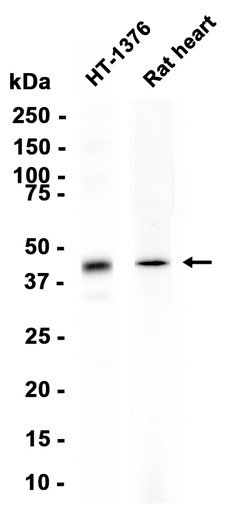
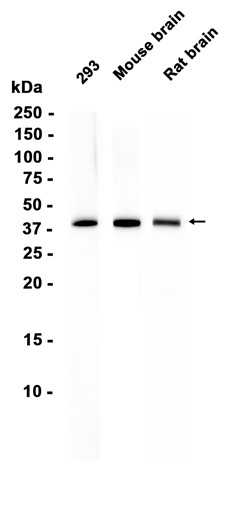
WB
WB 推荐条件
| 推荐稀释 | 请参考验证图说明或咨询技术支持 |
|---|---|
| 建议样本/阳性对照 | 建议选择靶点高表达样本作为阳性对照 |
| 关键条件 | 建议使用新鲜裂解样本,按推荐稀释比例孵育一抗,并关注理论/实测分子量 |
| 预期结果 | 预期信号/条带约 75kDa/75kDa/75kDa |
| 对照设置 | 建议设置阳性样本、阴性样本和二抗/同型对照 |
IHC-P
IHC-P 推荐条件
| 推荐稀释 | 请参考验证图说明或咨询技术支持 |
|---|---|
| 建议样本/阳性对照 | 建议选择靶点高表达样本作为阳性对照 |
| 关键条件 | 石蜡切片建议优化抗原修复液 pH、修复时间和一抗孵育条件 |
| 预期结果 | 预期定位:Cytoplasm, cytosol, Cell membrane, Lipid droplet |
| 对照设置 | 建议设置阳性样本、阴性样本和二抗/同型对照 |
ICC/IF
ICC/IF 推荐条件
| 推荐稀释 | 请参考验证图说明或咨询技术支持 |
|---|---|
| 建议样本/阳性对照 | 建议选择靶点高表达样本作为阳性对照 |
| 关键条件 | 建议优化固定、通透和封闭条件,并设置二抗空白对照 |
| 预期结果 | 预期荧光定位:Cytoplasm, cytosol, Cell membrane, Lipid droplet |
| 对照设置 | 建议设置阳性样本、阴性样本和二抗/同型对照 |
相关产品
查找相关产品 >>
抗原信息
| 抗原信息 | 请咨询 技术支持 |
|---|---|
| 序列 | Email For Sequence |
靶点信息
| 研究背景 | Non-heme iron-containing dioxygenase that catalyzes the stereo-specific peroxidation of free and esterified polyunsaturated fatty acids generating a spectrum of bioactive lipid mediators (PubMed:17052953, PubMed:1944593, PubMed:24282679, PubMed:25293588, PubMed:32404334, PubMed:8334154). It inserts peroxyl groups at C12 or C15 of arachidonate ((5Z,8Z,11Z,14Z)-eicosatetraenoate) producing both 12-hydroperoxyeicosatetraenoate/12-HPETE and 15-hydroperoxyeicosatetraenoate/15-HPETE (PubMed:17052953, PubMed:1944593, PubMed:24282679, PubMed:8334154). It may then act on 12-HPETE to produce hepoxilins, which may show pro-inflammatory properties (By similarity). Can also peroxidize linoleate ((9Z,12Z)-octadecadienoate) to 13-hydroperoxyoctadecadienoate/13-HPODE (PubMed:8334154). May participate in the sequential oxidations of DHA ((4Z,7Z,10Z,13Z,16Z,19Z)-docosahexaenoate) to generate specialized pro-resolving mediators (SPMs)like resolvin D5 ((7S,17S)-diHPDHA) and (7S,14S)-diHPDHA, that actively down-regulate the immune response and have anti-aggregation properties with platelets (PubMed:32404334). Can convert epoxy fatty acids to hydroperoxy-epoxides derivatives followed by an intramolecular nucleophilic substitution leading to the formation of monocyclic endoperoxides (PubMed:25293588). Plays an important role during the maintenance of self-tolerance by peroxidizing membrane-bound phosphatidylethanolamine which can then signal the sorting process for clearance of apoptotic cells during inflammation and prevent an autoimmune response. In addition to its role in the immune and inflammatory responses, this enzyme may play a role in epithelial wound healing in the cornea through production of lipoxin A4 (LXA(4)) and docosahexaenoic acid-derived neuroprotectin D1 (NPD1; 10R,17S-HDHA), both lipid autacoids exhibit anti-inflammatory and neuroprotective properties. Furthermore, it may regulate actin polymerization which is crucial for several biological processes such as the phagocytosis of apoptotic cells. It is also implicated in the generation of endogenous ligands for peroxisome proliferator activated receptor (PPAR-gamma), hence modulating macrophage development and function. It may also exert a negative effect on skeletal development by regulating bone mass through this pathway. As well as participates in ER stress and downstream inflammation in adipocytes, pancreatic islets, and liver (By similarity). Finally, it is also involved in the cellular response to IL13/interleukin-13 (PubMed:21831839) Non-heme iron-containing dioxygenase that catalyzes the stereo-specific peroxidation of free and esterified polyunsaturated fatty acids generating a spectrum of bioactive lipid mediators (PubMed:8188678). It inserts peroxyl groups at C12 or C15 of arachidonate ((5Z,8Z,11Z,14Z)-eicosatetraenoate) producing both 12-hydroperoxyeicosatetraenoate/12-HPETE and 15-hydroperoxyeicosatetraenoate/15-HPETE (PubMed:8188678). It may then act on 12-HPETE to produce hepoxilins, which may show pro-inflammatory properties (By similarity). Can also peroxidize linoleate ((9Z,12Z)-octadecadienoate) to 13-hydroperoxyoctadecadienoate. May participate in the sequential oxidations of DHA ((4Z,7Z,10Z,13Z,16Z,19Z)-docosahexaenoate) to generate specialized pro-resolving mediators (SPMs)like resolvin D5 ((7S,17S)-diHPDHA) and (7S,14S)-diHPDHA, that actively down-regulate the immune response and have anti-aggregation properties with platelets. Can convert epoxy fatty acids to hydroperoxy-epoxides derivatives followed by an intramolecular nucleophilic substitution leading to the formation of monocyclic endoperoxides (By similarity). Plays an important role during the maintenance of self-tolerance by peroxidizing membrane-bound phosphatidylethanolamine which can then signal the sorting process for clearance of apoptotic cells during inflammation and prevent an autoimmune response (PubMed:22503541). In addition to its role in the immune and inflammatory responses, this enzyme may play a role in epithelial wound healing in the cornea through production of lipoxin A4 (LXA(4)) and docosahexaenoic acid-derived neuroprotectin D1 (NPD1; 10R,17S-HDHA), both lipid autacoids exhibit anti-inflammatory and neuroprotective properties (PubMed:15708862). Furthermore, it may regulate actin polymerization which is crucial for several biological processes such as the phagocytosis of apoptotic cells (PubMed:11278875). It is also implicated in the generation of endogenous ligands for peroxisome proliferator activated receptor (PPAR-gamma), hence modulating macrophage development and function (PubMed:10432118). It may also exert a negative effect on skeletal development by regulating bone mass through this pathway (PubMed:14716014). As well as participates in ER stress and downstream inflammation in adipocytes, pancreatic islets, and liver (PubMed:22215650). Finally, it is also involved in the cellular response to IL13/interleukin-13 (By similarity) Non-heme iron-containing dioxygenase that catalyzes the stereo-specific peroxidation of free and esterified polyunsaturated fatty acids generating a spectrum of bioactive lipid mediators (PubMed:15123652, PubMed:23382512, PubMed:8117750, PubMed:8444196). It inserts peroxyl groups at C12 or C15 of arachidonate ((5Z,8Z,11Z,14Z)-eicosatetraenoate) producing both 12-hydroperoxyeicosatetraenoate/12-HPETE and 15-hydroperoxyeicosatetraenoate/15-HPETE (PubMed:15123652, PubMed:23382512, PubMed:8117750, PubMed:8444196). It may then act on 12-HPETE to produce hepoxilins, which may show pro-inflammatory properties (PubMed:15123652, PubMed:23382512). Can also peroxidize linoleate ((9Z,12Z)-octadecadienoate) to 13-hydroperoxyoctadecadienoate. May participate in the sequential oxidations of DHA ((4Z,7Z,10Z,13Z,16Z,19Z)-docosahexaenoate) to generate specialized pro-resolving mediators (SPMs)like resolvin D5 ((7S,17S)-diHPDHA) and (7S,14S)-diHPDHA, that actively down-regulate the immune response and have anti-aggregation properties with platelets. Can convert epoxy fatty acids to hydroperoxy-epoxides derivatives followed by an intramolecular nucleophilic substitution leading to the formation of monocyclic endoperoxides (By similarity). Plays an important role during the maintenance of self-tolerance by peroxidizing membrane-bound phosphatidylethanolamine which can then signal the sorting process for clearance of apoptotic cells during inflammation and prevent an autoimmune response. In addition to its role in the immune and inflammatory responses, this enzyme may play a role in epithelial wound healing in the cornea through production of lipoxin A4 (LXA(4)) and docosahexaenoic acid-derived neuroprotectin D1 (NPD1; 10R,17S-HDHA), both lipid autacoids exhibit anti-inflammatory and neuroprotective properties. Furthermore, it may regulate actin polymerization which is crucial for several biological processes such as the phagocytosis of apoptotic cells. It is also implicated in the generation of endogenous ligands for peroxisome proliferator activated receptor (PPAR-gamma), hence modulating macrophage development and function. It may also exert a negative effect on skeletal development by regulating bone mass through this pathway. As well as participates in ER stress and downstream inflammation in adipocytes, pancreatic islets, and liver (By similarity). Finally, it is also involved in the cellular response to IL13/interleukin-13 (By similarity) |
|---|---|
| 基因 ID | 246 |
| 基因名 | ALOX15, Alox15 |
| Swiss | P16050, P39654, Q02759 |
| 别名 | ALOX15 (YD18597),ALOX15 (YD18597) Rabbit mAb,ALOX15,12/15-lipoxygenase,Arachidonate 12-lipoxygenase,leukocyte-type,Arachidonate 15-lipoxygenase,Arachidonate omega-6 lipoxygenase,Hepoxilin A3 synthase Alox15,Linoleate 13S-lipoxygenase,LOG15,Alox12l |
资料与技术支持
验证数据
2 张验证图
页面顶部轮播可查看应用验证图,覆盖 WB / IHC-P / ICC/IF。
常见问题
当前页面标注应用包括 WB, IHC-P, ICC/IF,建议结合页面验证图和推荐稀释比例进行预实验优化。
可通过页面询价/留言入口提交货号和批号,技术支持会协助提供对应批次资料。
页面推荐条件可作为起始浓度,不同样本、固定方式和检测体系可能需要梯度优化。