
SIRT7 (YD35882) Rabbit mAb (Cat.#:AYD16596)
小A
Sales advisor

Scan with WeChat to add an advisor
Cat.#:AYD16596
| Size | Price | |
|---|---|---|
| 50ul | RMB: 680Sale1280 | Add to cart |
| 100ul | RMB: 1219Sale2300 | Add to cart |
Sales Terms | Request COA | Stock and shipping are confirmed by support
Information
Application guide
Immunogen
Target data
Resources
Protocols
FAQs
| Reactivity | Human, Mouse, Rat |
|---|---|
| Host | Rabbit |
| Clonality | Monoclonal |
| Isotype | IgG |
| Application | WBIHC-PIP |
| Dilution | |
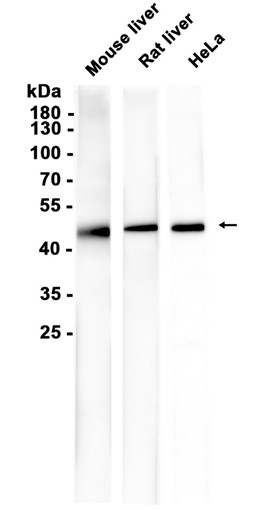
| Predicted MW | 45kDa/45kDa/45kDa |
| Observed MW | |
| Format | Liquid |
| Storage | Store at -20℃. Avoid freeze / thaw cycles. Buffer: PBS with 0.75% BSA,50% glycerol,pH7.3. |
| Conjugate | Unconjugated |
| Positive | Liver,Spleen,Testis |
| Subcellular | Nucleus, nucleolus, nucleoplasm, Chromosome, Cytoplasm |
| Purification | 亲和纯化 |
Applications and conditions
These starting conditions come from the recommended dilution, validation images, and general assay practice. Titrate for your sample and detection system.
| Recommended dilution | See the validation images or contact technical support |
|---|---|
| Suggested sample / positive control | Liver,Spleen,Testis |
| Key conditions | Use a fresh lysate, incubate at the recommended dilution, and check the predicted and observed molecular weight |
| Expected result | Expected signal or band near 45kDa/45kDa/45kDa |
| Controls | Include a positive sample, a negative sample, and a secondary or isotype control |
| Recommended dilution | See the validation images or contact technical support |
|---|---|
| Suggested sample / positive control | Liver,Spleen,Testis |
| Key conditions | For paraffin sections, optimize retrieval buffer pH, retrieval time, and primary incubation |
| Expected result | Expected localization: Nucleus, nucleolus, nucleoplasm, Chromosome, Cytoplasm |
| Controls | Include a positive sample, a negative sample, and a secondary or isotype control |
| Recommended dilution | See the validation images or contact technical support |
|---|---|
| Suggested sample / positive control | Liver,Spleen,Testis |
| Key conditions | Start at the recommended dilution and titrate for your sample and assay |
| Expected result | Expected signal or band near 45kDa/45kDa/45kDa |
| Controls | Include a positive sample, a negative sample, and a secondary or isotype control |
Immunogen
| Immunogen | Please contact Support |
|---|---|
| Sequence | Request sequence |
Target data
| Background | NAD-dependent protein-lysine deacylase that can act both as a deacetylase or deacylase (desuccinylase, depropionylase, deglutarylase and dedecanoylase), depending on the context (PubMed:22722849, PubMed:26907567, PubMed:30653310, PubMed:31542297, PubMed:35939806). Specifically mediates deacetylation of histone H3 at 'Lys-18' (H3K18Ac) (PubMed:22722849, PubMed:30420520, PubMed:35939806). In contrast to other histone deacetylases, displays strong preference for a specific histone mark, H3K18Ac, directly linked to control of gene expression (PubMed:22722849, PubMed:30653310). H3K18Ac is mainly present around the transcription start site of genes and has been linked to activation of nuclear hormone receptors; SIRT7 thereby acts as a transcription repressor (PubMed:22722849). Moreover, H3K18 hypoacetylation has been reported as a marker of malignancy in various cancers and seems to maintain the transformed phenotype of cancer cells (PubMed:22722849). Also able to mediate deacetylation of histone H3 at 'Lys-36' (H3K36Ac) in the context of nucleosomes (PubMed:30653310). Also mediates deacetylation of non-histone proteins, such as ATM, CDK9, DDX21, DDB1, FBL, FKBP5/FKBP51, GABPB1, RAN, RRP9/U3-55K and POLR1E/PAF53 (PubMed:24207024, PubMed:26867678, PubMed:28147277, PubMed:28426094, PubMed:28790157, PubMed:28886238, PubMed:30540930, PubMed:30944854, PubMed:31075303). Enriched in nucleolus where it stimulates transcription activity of the RNA polymerase I complex (PubMed:16618798, PubMed:19174463, PubMed:24207024). Acts by mediating the deacetylation of the RNA polymerase I subunit POLR1E/PAF53, thereby promoting the association of RNA polymerase I with the rDNA promoter region and coding region (PubMed:16618798, PubMed:19174463, PubMed:24207024). In response to metabolic stress, SIRT7 is released from nucleoli leading to hyperacetylation of POLR1E/PAF53 and decreased RNA polymerase I transcription (PubMed:24207024). Required to restore the transcription of ribosomal RNA (rRNA) at the exit from mitosis (PubMed:19174463). Promotes pre-ribosomal RNA (pre-rRNA) cleavage at the 5'-terminal processing site by mediating deacetylation of RRP9/U3-55K, a core subunit of the U3 snoRNP complex (PubMed:26867678). Mediates 'Lys-37' deacetylation of Ran, thereby regulating the nuclear export of NF-kappa-B subunit RELA/p65 (PubMed:31075303). Acts as a regulator of DNA damage repair by mediating deacetylation of ATM during the late stages of DNA damage response, promoting ATM dephosphorylation and deactivation (PubMed:30944854). Suppresses the activity of the DCX (DDB1-CUL4-X-box) E3 ubiquitin-protein ligase complexes by mediating deacetylation of DDB1, which prevents the interaction between DDB1 and CUL4 (CUL4A or CUL4B) (PubMed:28886238). Activates RNA polymerase II transcription by mediating deacetylation of CDK9, thereby promoting 'Ser-2' phosphorylation of the C-terminal domain (CTD) of RNA polymerase II (PubMed:28426094). Deacetylates FBL, promoting histone-glutamine methyltransferase activity of FBL (PubMed:30540930). Acts as a regulator of mitochondrial function by catalyzing deacetylation of GABPB1 (By similarity). Regulates Akt/AKT1 activity by mediating deacetylation of FKBP5/FKBP51 (PubMed:28147277). Required to prevent R-loop-associated DNA damage and transcription-associated genomic instability by mediating deacetylation and subsequent activation of DDX21, thereby overcoming R-loop-mediated stalling of RNA polymerases (PubMed:28790157). In addition to protein deacetylase activity, also acts as a protein-lysine deacylase (PubMed:27436229, PubMed:27997115, PubMed:31542297). Acts as a protein depropionylase by mediating depropionylation of Osterix (SP7), thereby regulating bone formation by osteoblasts (By similarity). Acts as a histone deglutarylase by mediating deglutarylation of histone H4 on 'Lys-91' (H4K91glu); a mark that destabilizes nucleosomes by promoting dissociation of the H2A-H2B dimers from nucleosomes (PubMed:31542297). Acts as a histone desuccinylase: in response to DNA damage, recruited to DNA double-strand breaks (DSBs) and catalyzes desuccinylation of histone H3 on 'Lys-122' (H3K122succ), thereby promoting chromatin condensation and DSB repair (PubMed:27436229). Also promotes DSB repair by promoting H3K18Ac deacetylation, regulating non-homologous end joining (NHEJ) (By similarity). Along with its role in DNA repair, required for chromosome synapsis during prophase I of female meiosis by catalyzing H3K18Ac deacetylation (By similarity). Involved in transcriptional repression of LINE-1 retrotransposon via H3K18Ac deacetylation, and promotes their association with the nuclear lamina (PubMed:31226208). Required to stabilize ribosomal DNA (rDNA) heterochromatin and prevent cellular senescence induced by rDNA instability (PubMed:29728458). Acts as a negative regulator of SIRT1 by preventing autodeacetylation of SIRT1, restricting SIRT1 deacetylase activity (By similarity) NAD-dependent protein-lysine deacylase that can act both as a deacetylase or deacylase (desuccinylase, depropionylase and deglutarylase), depending on the context (PubMed:25200183, PubMed:30026585, PubMed:31075303). Also acts as a dedecanoylase (By similarity). Specifically mediates deacetylation of histone H3 at 'Lys-18' (H3K18Ac) (By similarity). In contrast to other histone deacetylases, displays strong preference for a specific histone mark, H3K18Ac, directly linked to control of gene expression (By similarity). H3K18Ac is mainly present around the transcription start site of genes and has been linked to activation of nuclear hormone receptors; SIRT7 thereby acts as a transcription repressor (By similarity). Moreover, H3K18 hypoacetylation has been reported as a marker of malignancy in various cancers and seems to maintain the transformed phenotype of cancer cells (By similarity). Also able to mediate deacetylation of histone H3 at 'Lys-36' (H3K36Ac) in the context of nucleosomes (By similarity). Also mediates deacetylation of non-histone proteins, such as ATM, CDK9, DDX21, DDB1, FBL, FKBP5/FKBP51, GABPB1, RAN, RRP9/U3-55K and POLR1E/PAF53 (By similarity). Enriched in nucleolus where it stimulates transcription activity of the RNA polymerase I complex (PubMed:16618798). Acts by mediating the deacetylation of the RNA polymerase I subunit POLR1E/PAF53, thereby promoting the association of RNA polymerase I with the rDNA promoter region and coding region (By similarity). In response to metabolic stress, SIRT7 is released from nucleoli leading to hyperacetylation of POLR1E/PAF53 and decreased RNA polymerase I transcription (By similarity). Required to restore the transcription of ribosomal RNA (rRNA) at the exit from mitosis (PubMed:16618798). Promotes pre-ribosomal RNA (pre-rRNA) cleavage at the 5'-terminal processing site by mediating deacetylation of RRP9/U3-55K, a core subunit of the U3 snoRNP complex (By similarity). Mediates 'Lys-37' deacetylation of Ran, thereby regulating the nuclear export of NF-kappa-B subunit RELA/p65 (PubMed:31075303). Acts as a regulator of DNA damage repair by mediating deacetylation of ATM during the late stages of DNA damage response, promoting ATM dephosphorylation and deactivation (By similarity). May also deacetylate p53/TP53 and promotes cell survival, however such data need additional confirmation (PubMed:18239138). Suppresses the activity of the DCX (DDB1-CUL4-X-box) E3 ubiquitin-protein ligase complexes by mediating deacetylation of DDB1, which prevents the interaction between DDB1 and CUL4 (CUL4A or CUL4B) (By similarity). Activates RNA polymerase II transcription by mediating deacetylation of CDK9, thereby promoting 'Ser-2' phosphorylation of the C-terminal domain (CTD) of RNA polymerase II (By similarity). Deacetylates FBL, promoting histone-glutamine methyltransferase activity of FBL (By similarity). Acts as a regulator of mitochondrial function by catalyzing deacetylation of GABPB1 (PubMed:25200183). Regulates Akt/AKT1 activity by mediating deacetylation of FKBP5/FKBP51 (By similarity). Required to prevent R-loop-associated DNA damage and transcription-associated genomic instability by mediating deacetylation and subsequent activation of DDX21, thereby overcoming R-loop-mediated stalling of RNA polymerases (By similarity). In addition to protein deacetylase activity, also acts as protein-lysine deacylase (By similarity). Acts as a protein depropionylase by mediating depropionylation of Osterix (SP7), thereby regulating bone formation by osteoblasts (PubMed:30026585). Acts as a histone deglutarylase by mediating deglutarylation of histone H4 on 'Lys-91' (H4K91glu); a mark that destabilizes nucleosomes by promoting dissociation of the H2A-H2B dimers from nucleosomes (By similarity). Acts as a histone desuccinylase: in response to DNA damage, recruited to DNA double-strand breaks (DSBs) and catalyzes desuccinylation of histone H3 on 'Lys-122' (H3K122succ), thereby promoting chromatin condensation and DSB repair (By similarity). Also promotes DSB repair by promoting H3K18Ac deacetylation, regulating non-homologous end joining (NHEJ) (PubMed:27225932). Along with its role in DNA repair, required for chromosome synapsis during prophase I of female meiosis by catalyzing H3K18Ac deacetylation (PubMed:31256246). Involved in transcriptional repression of LINE-1 retrotransposon via H3K18Ac deacetylation, and promotes their association with the nuclear lamina (PubMed:31226208). Required to stabilize ribosomal DNA (rDNA) heterochromatin and prevent cellular senescence induced by rDNA instability (PubMed:28842251). Acts as a negative regulator of SIRT1 by preventing autodeacetylation of SIRT1, restricting SIRT1 deacetylase activity (PubMed:28923965) NAD-dependent protein-lysine deacylase that can act both as a deacetylase or deacylase (desuccinylase, depropionylase, deglutarylase and dedecanoylase), depending on the context. Specifically mediates deacetylation of histone H3 at 'Lys-18' (H3K18Ac). In contrast to other histone deacetylases, displays strong preference for a specific histone mark, H3K18Ac, directly linked to control of gene expression. H3K18Ac is mainly present around the transcription start site of genes and has been linked to activation of nuclear hormone receptors; SIRT7 thereby acts as a transcription repressor. Moreover, H3K18 hypoacetylation has been reported as a marker of malignancy in various cancers and seems to maintain the transformed phenotype of cancer cells. Also able to mediate deacetylation of histone H3 at 'Lys-36' (H3K36Ac) in the context of nucleosomes. Also mediates deacetylation of non-histone proteins, such as ATM, CDK9, DDX21, DDB1, FBL, FKBP5/FKBP51, GABPB1, RAN, RRP9/U3-55K and POLR1E/PAF53. Enriched in nucleolus where it stimulates transcription activity of the RNA polymerase I complex. Acts by mediating the deacetylation of the RNA polymerase I subunit POLR1E/PAF53, thereby promoting the association of RNA polymerase I with the rDNA promoter region and coding region. In response to metabolic stress, SIRT7 is released from nucleoli leading to hyperacetylation of POLR1E/PAF53 and decreased RNA polymerase I transcription. Required to restore the transcription of ribosomal RNA (rRNA) at the exit from mitosis. Promotes pre-ribosomal RNA (pre-rRNA) cleavage at the 5'-terminal processing site by mediating deacetylation of RRP9/U3-55K, a core subunit of the U3 snoRNP complex. Mediates 'Lys-37' deacetylation of Ran, thereby regulating the nuclear export of NF-kappa-B subunit RELA/p65. Acts as a regulator of DNA damage repair by mediating deacetylation of ATM during the late stages of DNA damage response, promoting ATM dephosphorylation and deactivation. Suppresses the activity of the DCX (DDB1-CUL4-X-box) E3 ubiquitin-protein ligase complexes by mediating deacetylation of DDB1, which prevents the interaction between DDB1 and CUL4 (CUL4A or CUL4B). Activates RNA polymerase II transcription by mediating deacetylation of CDK9, thereby promoting 'Ser-2' phosphorylation of the C-terminal domain (CTD) of RNA polymerase II. Deacetylates FBL, promoting histone-glutamine methyltransferase activity of FBL (By similarity). Acts as a regulator of mitochondrial function by catalyzing deacetylation of GABPB1 (By similarity). Regulates Akt/AKT1 activity by mediating deacetylation of FKBP5/FKBP51. Required to prevent R-loop-associated DNA damage and transcription-associated genomic instability by mediating deacetylation and subsequent activation of DDX21, thereby overcoming R-loop-mediated stalling of RNA polymerases. In addition to protein deacetylase activity, also acts as a protein-lysine deacylase (By similarity). Acts as a protein depropionylase by mediating depropionylation of Osterix (SP7), thereby regulating bone formation by osteoblasts (By similarity). Acts as a histone deglutarylase by mediating deglutarylation of histone H4 on 'Lys-91' (H4K91glu); a mark that destabilizes nucleosomes by promoting dissociation of the H2A-H2B dimers from nucleosomes. Acts as a histone desuccinylase: in response to DNA damage, recruited to DNA double-strand breaks (DSBs) and catalyzes desuccinylation of histone H3 on 'Lys-122' (H3K122succ), thereby promoting chromatin condensation and DSB repair (By similarity). Also promotes DSB repair by promoting H3K18Ac deacetylation, regulating non-homologous end joining (NHEJ). Along with its role in DNA repair, required for chromosome synapsis during prophase I of female meiosis by catalyzing H3K18Ac deacetylation (By similarity). Involved in transcriptional repression of LINE-1 retrotransposon via H3K18Ac deacetylation, and promotes their association with the nuclear lamina. Required to stabilize ribosomal DNA (rDNA) heterochromatin and prevent cellular senescence induced by rDNA instability (By similarity). Acts as a negative regulator of SIRT1 by preventing autodeacetylation of SIRT1, restricting SIRT1 deacetylase activity (By similarity) |
|---|---|
| Gene ID | 51547 |
| Gene name | SIRT7, Sirt7 |
| Swiss | Q9NRC8, Q8BKJ9, B2RZ55 |
| Synonym | SIRT7 (YD35882),SIRT7 (YD35882) Rabbit mAb,SIRT7,NAD-dependent protein deacylase sirtuin-7,Regulatory protein SIR2 homolog 7,SIR2-like protein 7,SIR2L7 |
Resources
Validation data
1 images
Validation images at the top of the page cover WB / IHC-P / IP.
References
No papers are linked yet. Contact technical support for application examples.
Ask for examplesCustomer reviews
No reviews yet. After use, you can submit a review and experiment images.
Send feedbackSupport
Support can help confirm the application, sample, dilution, controls, and assay conditions.
Support centerSend the catalog number, application, sample type, and assay. Support can confirm dilution, controls, and COA or lot documents.