
Human IgG (YD11705) Rabbit mAb (Cat.#:AYD16648)
小A
Sales advisor

Scan with WeChat to add an advisor
暂无验证图
欢迎提交实验图片,或联系 Support 获取更多信息。
Cat.#:AYD16648
| Size | Price | |
|---|---|---|
| 50ul | RMB: 680Sale1280 | Add to cart |
| 100ul | RMB: 1219Sale2300 | Add to cart |
Sales Terms | Request COA | Stock and shipping are confirmed by support
Information
Application guide
Related products
Immunogen
Target data
Resources
Protocols
FAQs
| Reactivity | Human |
|---|---|
| Host | Rabbit |
| Clonality | Monoclonal |
| Isotype | IgG |
| Application | WBIHC-P |
| Dilution | |
| Predicted MW | 44kDa/44kDa/49kDa/44kDa |
| Observed MW | |
| Format | Liquid |
| Storage | Store at -20℃. Avoid freeze / thaw cycles. Buffer: PBS with 0.75% BSA,50% glycerol,pH7.3. |
| Conjugate | Unconjugated |
| Positive | human plasma |
| Subcellular | Secreted, Cell membrane |
| Purification | 亲和纯化 |
Applications and conditions
These starting conditions come from the recommended dilution, validation images, and general assay practice. Titrate for your sample and detection system.
| Recommended dilution | See the validation images or contact technical support |
|---|---|
| Suggested sample / positive control | human plasma |
| Key conditions | Use a fresh lysate, incubate at the recommended dilution, and check the predicted and observed molecular weight |
| Expected result | Expected signal or band near 44kDa/44kDa/49kDa/44kDa |
| Controls | Include a positive sample, a negative sample, and a secondary or isotype control |
| Recommended dilution | See the validation images or contact technical support |
|---|---|
| Suggested sample / positive control | human plasma |
| Key conditions | For paraffin sections, optimize retrieval buffer pH, retrieval time, and primary incubation |
| Expected result | Expected localization: Secreted, Cell membrane |
| Controls | Include a positive sample, a negative sample, and a secondary or isotype control |
Related products
More associated products >>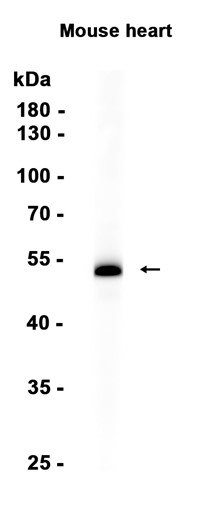
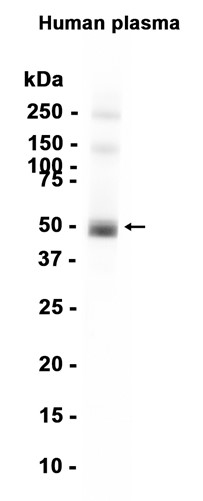
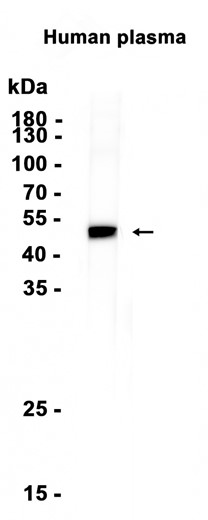
Immunogen
| Immunogen | Please contact Support |
|---|---|
| Sequence | Request sequence |
Target data
| Background | Constant region of immunoglobulin (Ig) heavy chains. Igs are membrane-bound or secreted glycoproteins produced by B lymphocytes. In the recognition phase of humoral immunity, the membrane-bound Igs serve as receptors, which upon binding to a specific antigen trigger the clonal expansion and differentiation of B lymphocytes into Ig-secreting plasma cells. Secreted Igs known as antibodies mediate the effector phase of humoral immunity by blocking the interaction of infectious antigens with cellular receptors (via the antigen-binding region) and eliciting effector mechanisms that lead to pathogen neutralization (via the constant region) (PubMed:17576170, PubMed:20176268, PubMed:22158414). The antigen-binding region is formed by the variable domain of one heavy chain paired with the variable domain of its associated light chain. Each Ig molecule has two antigen-binding sites with remarkable affinity for a particular antigen due to V-(D)-J rearrangement, somatic hypermutations and affinity maturation of the variable domains upon antigen exposure (PubMed:17576170, PubMed:20176268, PubMed:22158414). The constant region defines the Ig isotype that perform distinct sets of effector functions. B cells diversify and rearrange their Ig constant regions through class-switch recombination, a process by which the constant region is switched from one Ig isotype to another, namely from IgM and IgD to IgG, IgA and IgE (PubMed:17576170, PubMed:20176268, PubMed:22158414). The constant region of Ig gamma-1 (IgG1) isotype interacts (via the fragment crystallizable, Fc) with receptors on innate immune cells and the complement system to mediate humoral effector functions, including antibody-dependent cellular cytotoxicity or phagocytosis, complement-dependent cytotoxicity and inflammatory responses Constant region of immunoglobulin (Ig) heavy chains. Igs are membrane-bound or secreted glycoproteins produced by B lymphocytes. In the recognition phase of humoral immunity, the membrane-bound Igs serve as receptors, which upon binding to a specific antigen trigger the clonal expansion and differentiation of B lymphocytes into Ig-secreting plasma cells. Secreted Igs known as antibodies mediate the effector phase of humoral immunity by blocking the interaction of infectious antigens with cellular receptors (via the antigen-binding region) and eliciting effector mechanisms that lead to pathogen neutralization (via the constant region) (PubMed:17576170, PubMed:20176268, PubMed:22158414). The antigen-binding region is formed by the variable domain of one heavy chain paired with the variable domain of its associated light chain. Each Ig molecule has two antigen-binding sites with remarkable affinity for a particular antigen due to V-(D)-J rearrangement, somatic hypermutations and affinity maturation of the variable domains upon antigen exposure (PubMed:17576170, PubMed:20176268, PubMed:22158414). The constant region defines the Ig isotype that perform distinct sets of effector functions. B cells diversify and rearrange their Ig constant regions through class-switch recombination, a process by which the constant region is switched from one Ig isotype to another, namely from IgM and IgD to IgG, IgA and IgE (PubMed:17576170, PubMed:20176268, PubMed:22158414). The constant region interacts (via the fragment crystallizable, Fc) with receptors on innate immune cells and the complement system to mediate humoral effector functions. Ig gamma-2 (IgG2) isotype formed against polysaccharide structures found on encapsulated bacteria elicits antibody-dependent protection through activation of complement pathway Constant region of immunoglobulin (Ig) heavy chains. Igs are membrane-bound or secreted glycoproteins produced by B lymphocytes. In the recognition phase of humoral immunity, the membrane-bound Igs serve as receptors, which upon binding to a specific antigen trigger the clonal expansion and differentiation of B lymphocytes into Ig-secreting plasma cells. Secreted Igs known as antibodies mediate the effector phase of humoral immunity by blocking the interaction of infectious antigens with cellular receptors (via the antigen-binding region) and eliciting effector mechanisms that lead to pathogen neutralization (via the constant region) (PubMed:17576170, PubMed:20176268, PubMed:22158414). The antigen-binding region is formed by the variable domain of one heavy chain paired with the variable domain of its associated light chain. Each Ig molecule has two antigen-binding sites with remarkable affinity for a particular antigen due to V-(D)-J rearrangement, somatic hypermutations and affinity maturation of the variable domains upon antigen exposure (PubMed:17576170, PubMed:20176268, PubMed:22158414). The constant region defines the Ig isotype that perform distinct sets of effector functions. B cells diversify and rearrange their Ig constant regions through class-switch recombination, a process by which the constant region is switched from one Ig isotype to another, namely from IgM and IgD to IgG, IgA and IgE (PubMed:17576170, PubMed:20176268, PubMed:22158414). The constant region of Ig gamma-3 (IgG3) isotype interacts (via the fragment crystallizable, Fc) with receptors on innate immune cells and the complement system to mediate humoral effector functions, including antibody-dependent cellular cytotoxicity or phagocytosis, complement-dependent cytotoxicity and inflammatory responses Constant region of immunoglobulin (Ig) heavy chains. Igs are membrane-bound or secreted glycoproteins produced by B lymphocytes. In the recognition phase of humoral immunity, the membrane-bound Igs serve as receptors, which upon binding to a specific antigen trigger the clonal expansion and differentiation of B lymphocytes into Ig-secreting plasma cells. Secreted Igs known as antibodies mediate the effector phase of humoral immunity by blocking the interaction of infectious antigens with cellular receptors (via the antigen-binding region) and eliciting effector mechanisms that lead to pathogen neutralization (via the constant region) (PubMed:17576170, PubMed:20176268, PubMed:22158414). The antigen-binding region is formed by the variable domain of one heavy chain paired with the variable domain of its associated light chain. Each Ig molecule has two antigen-binding sites with remarkable affinity for a particular antigen due to V-(D)-J rearrangement, somatic hypermutations and affinity maturation of the variable domains upon antigen exposure (PubMed:17576170, PubMed:20176268, PubMed:22158414). The constant region defines the Ig isotype that perform distinct sets of effector functions. B cells diversify and rearrange their Ig constant regions through class-switch recombination, a process by which the constant region is switched from one Ig isotype to another, namely from IgM and IgD to IgG, IgA and IgE (PubMed:17576170, PubMed:20176268, PubMed:22158414). The constant region interacts (via the fragment crystallizable, Fc) with the Fc receptors on innate immune cells to mediate humoral effector functions. Ig gamma-4 (IgG4) isotype does not elicit antibody-dependent cellular cytotoxicity (ADDC) or complement-dependent cytotoxicity (CDC). Instead it is likely involved in immune tolerance mechanisms to allergens and parasites either by blocking IgE-antigen complex formation or by directly inhibiting mast cell degranulation through Fc receptor signaling. In the context of tumorigenesis, it may participate in immunosuppressive mechanisms |
|---|---|
| Gene ID | 3134 |
| Gene name | IGHG1, IGHG2, IGHG3, IGHG4 |
| Swiss | P01857, P01859, P01860, P01861 |
| Synonym | Human IgG (YD11705),Human IgG (YD11705) Rabbit mAb,IGHG1,IGHG2,IGHG3,IGHG4,Ig gamma-1 chain C region,Ig gamma-1 chain C region EU,Ig gamma-1 chain C region KOL,Ig gamma-1 chain C region NIE,Ig gamma-2 chain C region,Ig gamma-2 chain C region DOT,Ig gamma-2 chain C region TIL |
Resources
Validation data
Contact technical support for validation images and application examples.
References
No papers are linked yet. Contact technical support for application examples.
Ask for examplesCustomer reviews
No reviews yet. After use, you can submit a review and experiment images.
Send feedbackSupport
Support can help confirm the application, sample, dilution, controls, and assay conditions.
Support centerSend the catalog number, application, sample type, and assay. Support can confirm dilution, controls, and COA or lot documents.