
Acetyl-p53 (Lys305) (YD13712) Rabbit mAb (Cat.#:AYD11373)
小A
Sales advisor

Scan with WeChat to add an advisor
Cat.#:AYD11373
| Size | Price | |
|---|---|---|
| 50ul | RMB: 680Sale1280 | Add to cart |
| 100ul | RMB: 1219Sale2300 | Add to cart |
Sales Terms | Request COA | Stock and shipping are confirmed by support
Information
Application guide
Related products
Immunogen
Target data
Resources
Protocols
FAQs
| Reactivity | Human,Mouse,Rat |
|---|---|
| Host | Rabbit |
| Clonality | Monoclonal |
| Isotype | IgG |
| Application | WB |
| Dilution | |
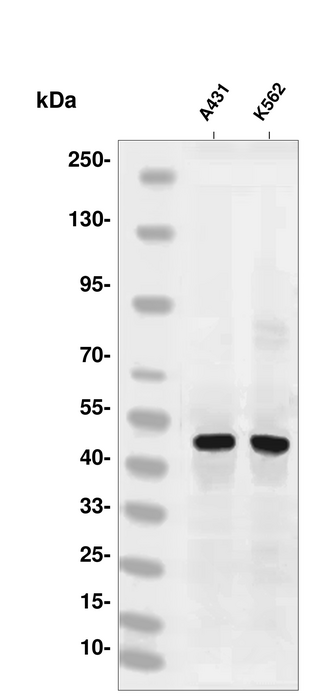
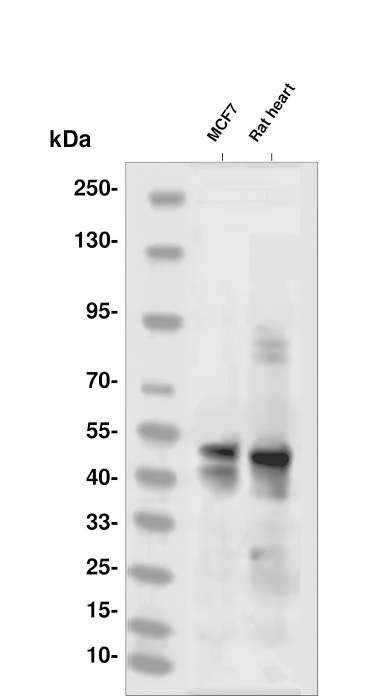
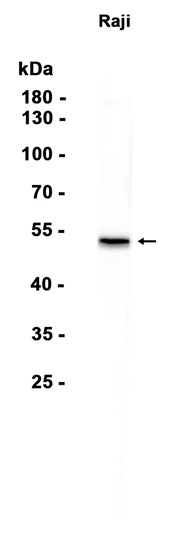
| Predicted MW | 44kDa/43kDa/43kDa |
| Observed MW | |
| Format | Liquid |
| Storage | Store at -20℃. Avoid freeze / thaw cycles. Buffer: PBS with 0.75% BSA,50% glycerol,pH7.3. |
| Conjugate | Unconjugated |
| Positive | 293T |
| Subcellular | Cytoplasm, Nucleus, PML body, Endoplasmic reticulum, Mitochondrion matrix, cytoskeleton, microtubule organizing center, centrosome |
| Purification | 亲和纯化 |
Applications and conditions
These starting conditions come from the recommended dilution, validation images, and general assay practice. Titrate for your sample and detection system.
| Recommended dilution | See the validation images or contact technical support |
|---|---|
| Suggested sample / positive control | 293T |
| Key conditions | Use a fresh lysate, incubate at the recommended dilution, and check the predicted and observed molecular weight |
| Expected result | Expected signal or band near 44kDa/43kDa/43kDa |
| Controls | Include a positive sample, a negative sample, and a secondary or isotype control |
Related products
More associated products >>
Immunogen
| Immunogen | Please contact Support |
|---|---|
| Sequence | Request sequence |
Target data
| Background | Multifunctional transcription factor that induces cell cycle arrest, DNA repair or apoptosis upon binding to its target DNA sequence (PubMed:11025664, PubMed:12524540, PubMed:12810724, PubMed:15186775, PubMed:15340061, PubMed:17317671, PubMed:17349958, PubMed:19556538, PubMed:20673990, PubMed:20959462, PubMed:22726440, PubMed:24051492, PubMed:24652652, PubMed:35618207, PubMed:36634798, PubMed:38653238, PubMed:9840937). Acts as a tumor suppressor in many tumor types; induces growth arrest or apoptosis depending on the physiological circumstances and cell type (PubMed:11025664, PubMed:12524540, PubMed:12810724, PubMed:15186775, PubMed:15340061, PubMed:17189187, PubMed:17317671, PubMed:17349958, PubMed:19556538, PubMed:20673990, PubMed:20959462, PubMed:22726440, PubMed:24051492, PubMed:24652652, PubMed:38653238, PubMed:9840937). Negatively regulates cell division by controlling expression of a set of genes required for this process (PubMed:11025664, PubMed:12524540, PubMed:12810724, PubMed:15186775, PubMed:15340061, PubMed:17317671, PubMed:17349958, PubMed:19556538, PubMed:20673990, PubMed:20959462, PubMed:22726440, PubMed:24051492, PubMed:24652652, PubMed:9840937). One of the activated genes is an inhibitor of cyclin-dependent kinases. Apoptosis induction seems to be mediated either by stimulation of BAX and FAS antigen expression, or by repression of Bcl-2 expression (PubMed:12524540, PubMed:17189187). Its pro-apoptotic activity is activated via its interaction with PPP1R13B/ASPP1 or TP53BP2/ASPP2 (PubMed:12524540). However, this activity is inhibited when the interaction with PPP1R13B/ASPP1 or TP53BP2/ASPP2 is displaced by PPP1R13L/iASPP (PubMed:12524540). In cooperation with mitochondrial PPIF is involved in activating oxidative stress-induced necrosis; the function is largely independent of transcription. Induces the transcription of long intergenic non-coding RNA p21 (lincRNA-p21) and lincRNA-Mkln1. LincRNA-p21 participates in TP53-dependent transcriptional repression leading to apoptosis and seems to have an effect on cell-cycle regulation. Implicated in Notch signaling cross-over. Prevents CDK7 kinase activity when associated to CAK complex in response to DNA damage, thus stopping cell cycle progression. Isoform 2 enhances the transactivation activity of isoform 1 from some but not all TP53-inducible promoters. Isoform 4 suppresses transactivation activity and impairs growth suppression mediated by isoform 1. Isoform 7 inhibits isoform 1-mediated apoptosis. Regulates the circadian clock by repressing CLOCK-BMAL1-mediated transcriptional activation of PER2 (PubMed:24051492) Multifunctional transcription factor that induces cell cycle arrest, DNA repair or apoptosis upon binding to its target DNA sequence (PubMed:19556538, PubMed:20673990, PubMed:22726440). Acts as a tumor suppressor in many tumor types; induces growth arrest or apoptosis depending on the physiological circumstances and cell type. Negatively regulates cell division by controlling expression of a set of genes required for this process. One of the activated genes is an inhibitor of cyclin-dependent kinases. Apoptosis induction seems to be mediated either by stimulation of BAX and FAS antigen expression, or by repression of Bcl-2 expression. Its pro-apoptotic activity is activated via its interaction with PPP1R13B/ASPP1 or TP53BP2/ASPP2 (By similarity). However, this activity is inhibited when the interaction with PPP1R13B/ASPP1 or TP53BP2/ASPP2 is displaced by PPP1R13L/iASPP (By similarity). In cooperation with mitochondrial PPIF is involved in activating oxidative stress-induced necrosis; the function is largely independent of transcription. Prevents CDK7 kinase activity when associated to CAK complex in response to DNA damage, thus stopping cell cycle progression (By similarity). Induces the transcription of long intergenic non-coding RNA p21 (lincRNA-p21) and lincRNA-Mkln1. LincRNA-p21 participates in TP53-dependent transcriptional repression leading to apoptosis, but seems to have to effect on cell-cycle regulation. Regulates the circadian clock by repressing CLOCK-BMAL1-mediated transcriptional activation of PER2 (PubMed:24051492) Multifunctional transcription factor that induces cell cycle arrest, DNA repair or apoptosis upon binding to its target DNA sequence. Acts as a tumor suppressor in many tumor types; induces growth arrest or apoptosis depending on the physiological circumstances and cell type. Negatively regulates cell division by controlling expression of a set of genes required for this process. One of the activated genes is an inhibitor of cyclin-dependent kinases. Apoptosis induction seems to be mediated either by stimulation of BAX and FAS antigen expression, or by repression of Bcl-2 expression. Its pro-apoptotic activity is activated via its interaction with PPP1R13B/ASPP1 or TP53BP2/ASPP2 (By similarity). However, this activity is inhibited when the interaction with PPP1R13B/ASPP1 or TP53BP2/ASPP2 is displaced by PPP1R13L/iASPP (By similarity). In cooperation with mitochondrial PPIF is involved in activating oxidative stress-induced necrosis; the function is largely independent of transcription. Prevents CDK7 kinase activity when associated to CAK complex in response to DNA damage, thus stopping cell cycle progression. Induces the transcription of long intergenic non-coding RNA p21 (lincRNA-p21) and lincRNA-Mkln1. LincRNA-p21 participates in TP53-dependent transcriptional repression leading to apoptosis and seems to have an effect on cell-cycle regulation. Regulates the circadian clock by repressing CLOCK-ARNTL/BMAL1-mediated transcriptional activation of PER2 |
|---|---|
| Gene ID | 7157 |
| Gene name | TP53, Tp53 |
| Swiss | P04637, P02340, P10361 |
| Synonym | Acetyl-p53 (Lys305) (YD13712),Acetyl-p53 (Lys305) (YD13712) Rabbit mAb,TP53,Antigen NY-CO-13,Phosphoprotein p53,Tumor suppressor p53,P53,Trp53 |
Resources
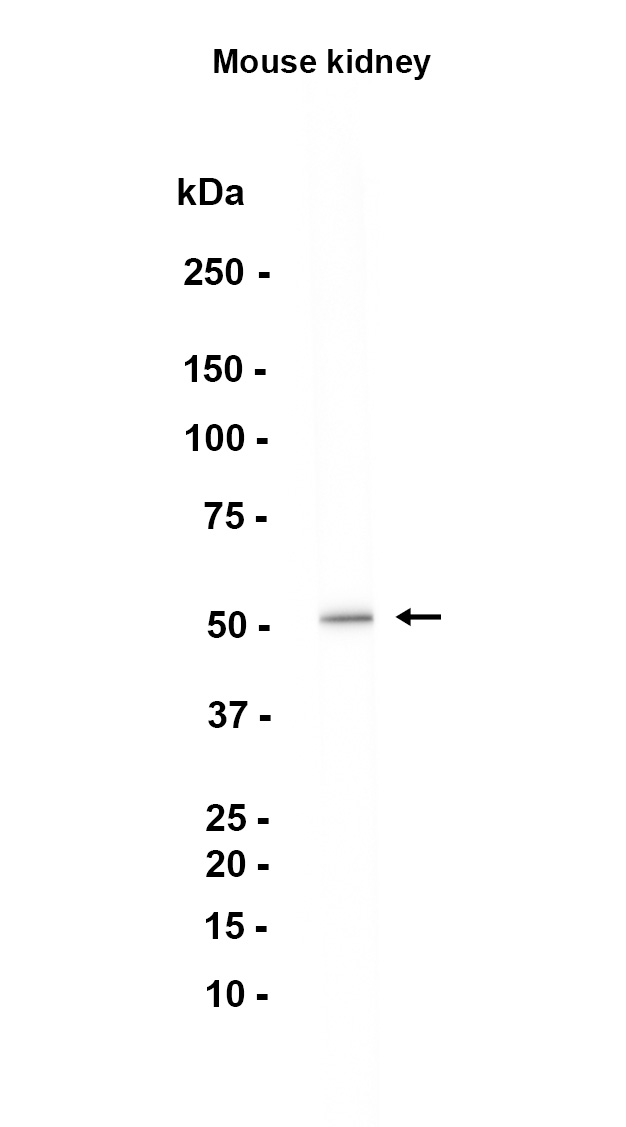
Validation data
1 images
Validation images at the top of the page cover WB.
References
No papers are linked yet. Contact technical support for application examples.
Ask for examplesCustomer reviews
No reviews yet. After use, you can submit a review and experiment images.
Send feedbackSupport
Support can help confirm the application, sample, dilution, controls, and assay conditions.
Support centerSend the catalog number, application, sample type, and assay. Support can confirm dilution, controls, and COA or lot documents.