
SQSTM1/p62 (YD13645) Rabbit mAb (货号:AYD15523)
A
小A
销售顾问

请使用微信扫一扫
添加顾问进行咨询
货号
AYD15523
靶点/基因
SQSTM1/Sqstm1
宿主
Rabbit
克隆性
Monoclonal
反应种属
Human, Mouse, Rat
应用
WB, ICC/IF, FC, IP
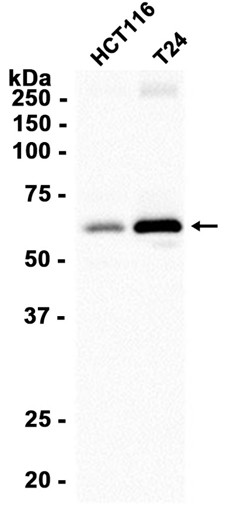
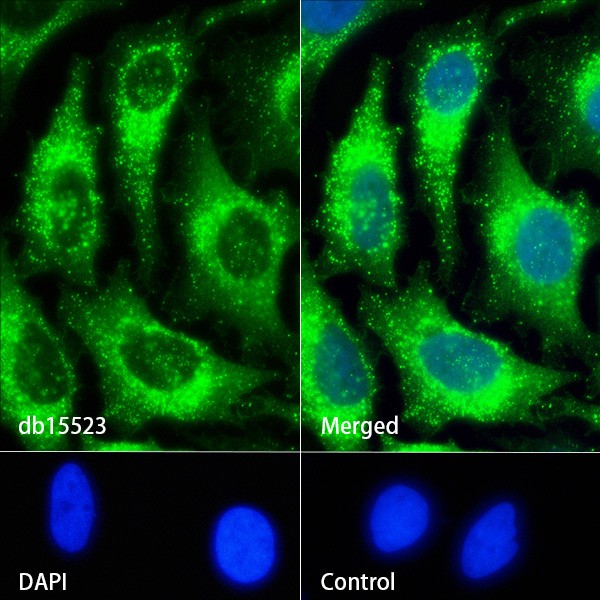
产品信息
应用指南
相关产品
抗原信息
靶点信息
资料与支持
实验步骤
常见问题
| 反应 | Human, Mouse, Rat |
|---|---|
| 宿主 | Rabbit |
| 克隆性 | Monoclonal |
| 同种型 | IgG |
| 应用 | WBICC/IFFCIP |
| 推荐浓度 | |
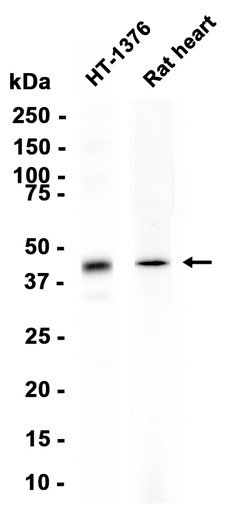
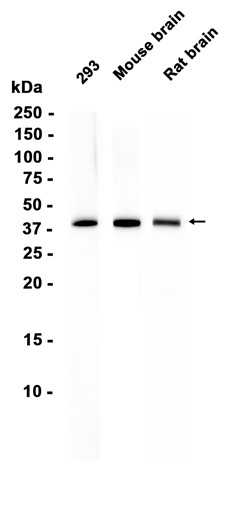
| 理论分子量 | 48kDa/48kDa/48kDa |
| 实测分子量 | |
| 形式 | Liquid |
| 保存条件 | Store at -20℃. Avoid freeze / thaw cycles. Buffer: PBS with 0.75% BSA,50% glycerol,pH7.3. |
| 偶联物 | Unconjugated |
| 阳性对照 | |
| 细胞定位 | Cytoplasmic vesicle, autophagosome, Preautophagosomal structure, Cytoplasm, cytosol, Nucleus, PML body, Late endosome, Lysosome, Endoplasmic reticulum, myofibril, sarcomere |
| 纯化 | 亲和纯化 |
应用与推荐条件
快速判断怎么用
以下条件基于推荐浓度、验证图说明与通用实验要求整理,可作为预实验起点;不同样本和检测体系建议做梯度优化。
WB
WB 推荐条件
| 推荐稀释 | 请参考验证图说明或咨询技术支持 |
|---|---|
| 建议样本/阳性对照 | 建议选择靶点高表达样本作为阳性对照 |
| 关键条件 | 建议使用新鲜裂解样本,按推荐稀释比例孵育一抗,并关注理论/实测分子量 |
| 预期结果 | 预期信号/条带约 48kDa/48kDa/48kDa |
| 对照设置 | 建议设置阳性样本、阴性样本和二抗/同型对照 |
ICC/IF
ICC/IF 推荐条件
| 推荐稀释 | 请参考验证图说明或咨询技术支持 |
|---|---|
| 建议样本/阳性对照 | 建议选择靶点高表达样本作为阳性对照 |
| 关键条件 | 建议优化固定、通透和封闭条件,并设置二抗空白对照 |
| 预期结果 | 预期荧光定位:Cytoplasmic vesicle, autophagosome, Preautophagosomal structure, Cytoplasm, cytosol, Nucleus, PML body, Late endosome, Lysosome, Endoplasmic reticulum, myofibril, sarcomere |
| 对照设置 | 建议设置阳性样本、阴性样本和二抗/同型对照 |
FC
FC 推荐条件
| 推荐稀释 | 请参考验证图说明或咨询技术支持 |
|---|---|
| 建议样本/阳性对照 | 建议选择靶点高表达样本作为阳性对照 |
| 关键条件 | 如检测胞内靶点,需优化固定/通透条件,并设置同型对照 |
| 预期结果 | 预期阳性群体荧光信号相对阴性/同型对照右移 |
| 对照设置 | 建议设置阳性样本、阴性样本和二抗/同型对照 |
IP
IP 推荐条件
| 推荐稀释 | 请参考验证图说明或咨询技术支持 |
|---|---|
| 建议样本/阳性对照 | 建议选择靶点高表达样本作为阳性对照 |
| 关键条件 | 建议从页面推荐浓度开始,结合样本与检测体系做梯度优化 |
| 预期结果 | 预期信号/条带约 48kDa/48kDa/48kDa |
| 对照设置 | 建议设置阳性样本、阴性样本和二抗/同型对照 |
相关产品
查找相关产品 >>
抗原信息
| 抗原信息 | 请咨询 技术支持 |
|---|---|
| 序列 | Email For Sequence |
靶点信息
| 研究背景 | Molecular adapter required for selective macroautophagy (aggrephagy) by acting as a bridge between polyubiquitinated proteins and autophagosomes (PubMed:15340068, PubMed:15953362, PubMed:16286508, PubMed:17580304, PubMed:20168092, PubMed:22017874, PubMed:22622177, PubMed:24128730, PubMed:28404643, PubMed:29343546, PubMed:29507397, PubMed:31857589, PubMed:33509017, PubMed:34471133, PubMed:34893540, PubMed:35831301, PubMed:37306101, PubMed:37802024). Promotes the recruitment of ubiquitinated cargo proteins to autophagosomes via multiple domains that bridge proteins and organelles in different steps (PubMed:16286508, PubMed:20168092, PubMed:22622177, PubMed:24128730, PubMed:28404643, PubMed:29343546, PubMed:29507397, PubMed:34893540, PubMed:37802024). SQSTM1 first mediates the assembly and removal of ubiquitinated proteins by undergoing liquid-liquid phase separation upon binding to ubiquitinated proteins via its UBA domain, leading to the formation of insoluble cytoplasmic inclusions, known as p62 bodies (PubMed:15911346, PubMed:20168092, PubMed:22017874, PubMed:24128730, PubMed:29343546, PubMed:29507397, PubMed:31857589, PubMed:37802024). SQSTM1 then interacts with ATG8 family proteins on autophagosomes via its LIR motif, leading to p62 body recruitment to autophagosomes, followed by autophagic clearance of ubiquitinated proteins (PubMed:16286508, PubMed:17580304, PubMed:20168092, PubMed:22622177, PubMed:24128730, PubMed:28404643, PubMed:37802024). SQSTM1 is itself degraded along with its ubiquitinated cargos (PubMed:16286508, PubMed:17580304, PubMed:37802024). Also required to recruit ubiquitinated proteins to PML bodies in the nucleus (PubMed:20168092). Also involved in autophagy of peroxisomes (pexophagy) in response to reactive oxygen species (ROS) by acting as a bridge between ubiquitinated PEX5 receptor and autophagosomes (PubMed:26344566). Acts as an activator of the NFE2L2/NRF2 pathway via interaction with KEAP1: interaction inactivates the BCR(KEAP1) complex by sequestering the complex in inclusion bodies, promoting nuclear accumulation of NFE2L2/NRF2 and subsequent expression of cytoprotective genes (PubMed:20452972, PubMed:28380357, PubMed:33393215, PubMed:37306101). Promotes relocalization of 'Lys-63'-linked ubiquitinated STING1 to autophagosomes (PubMed:29496741). Involved in endosome organization by retaining vesicles in the perinuclear cloud: following ubiquitination by RNF26, attracts specific vesicle-associated adapters, forming a molecular bridge that restrains cognate vesicles in the perinuclear region and organizes the endosomal pathway for efficient cargo transport (PubMed:27368102, PubMed:33472082). Sequesters tensin TNS2 into cytoplasmic puncta, promoting TNS2 ubiquitination and proteasomal degradation (PubMed:25101860). May regulate the activation of NFKB1 by TNF, nerve growth factor (NGF) and interleukin-1 (PubMed:10356400, PubMed:10747026, PubMed:11244088, PubMed:12471037, PubMed:16079148, PubMed:19931284). May play a role in titin/TTN downstream signaling in muscle cells (PubMed:15802564). Adapter that mediates the interaction between TRAF6 and CYLD (By similarity) Molecular adapter required for selective macroautophagy (aggrephagy) by acting as a bridge between polyubiquitinated proteins and autophagosomes (PubMed:25723488, PubMed:33397898, PubMed:37306101). Promotes the recruitment of ubiquitinated cargo proteins to autophagosomes via multiple domains that bridge proteins and organelles in different steps (PubMed:25723488, PubMed:33397898). SQSTM1 first mediates the assembly and removal of ubiquitinated proteins by undergoing liquid-liquid phase separation upon binding to ubiquitinated proteins via its UBA domain, leading to the formation of insoluble cytoplasmic inclusions, known as p62 bodies (PubMed:33397898). SQSTM1 then interacts with ATG8 family proteins on autophagosomes via its LIR motif, leading to p62 body recruitment to autophagosomes, followed by autophagic clearance of ubiquitinated proteins (PubMed:33397898). SQSTM1 is itself degraded along with its ubiquitinated cargos (By similarity). Also required to recruit ubiquitinated proteins to PML bodies in the nucleus (By similarity). Also involved in autophagy of peroxisomes (pexophagy) in response to reactive oxygen species (ROS) by acting as a bridge between ubiquitinated PEX5 receptor and autophagosomes (By similarity). Acts as an activator of the NFE2L2/NRF2 pathway via interaction with KEAP1: interaction inactivates the BCR(KEAP1) complex by sequestering the complex in inclusion bodies, promoting nuclear accumulation of NFE2L2/NRF2 and subsequent expression of cytoprotective genes (PubMed:20173742, PubMed:20421418, PubMed:24011591, PubMed:33397898, PubMed:37306101). Promotes relocalization of 'Lys-63'-linked ubiquitinated STING1 to autophagosomes (By similarity). Involved in endosome organization by retaining vesicles in the perinuclear cloud: following ubiquitination by RNF26, attracts specific vesicle-associated adapters, forming a molecular bridge that restrains cognate vesicles in the perinuclear region and organizes the endosomal pathway for efficient cargo transport (By similarity). Sequesters tensin TNS2 into cytoplasmic puncta, promoting TNS2 ubiquitination and proteasomal degradation (By similarity). May regulate the activation of NFKB1 by TNF, nerve growth factor (NGF) and interleukin-1 (By similarity). May play a role in titin/TTN downstream signaling in muscle cells (By similarity). Adapter that mediates the interaction between TRAF6 and CYLD (PubMed:14960283, PubMed:18382763) Molecular adapter required for selective macroautophagy (aggrephagy) by acting as a bridge between polyubiquitinated proteins and autophagosomes (By similarity). Promotes the recruitment of ubiquitinated cargo proteins to autophagosomes via multiple domains that bridge proteins and organelles in different steps (By similarity). SQSTM1 first mediates the assembly and removal of ubiquitinated proteins by undergoing liquid-liquid phase separation upon binding to ubiquitinated proteins via its UBA domain, leading to the formation of insoluble cytoplasmic inclusions, known as p62 bodies (By similarity). SQSTM1 then interacts with ATG8 family proteins on autophagosomes via its LIR motif, leading to p62 body recruitment to autophagosomes, followed by autophagic clearance of ubiquitinated proteins (By similarity). SQSTM1 is itself degraded along with its ubiquitinated cargos (By similarity). Also required to recruit ubiquitinated proteins to PML bodies in the nucleus (By similarity). Also involved in autophagy of peroxisomes (pexophagy) in response to reactive oxygen species (ROS) by acting as a bridge between ubiquitinated PEX5 receptor and autophagosomes (By similarity). Acts as an activator of the NFE2L2/NRF2 pathway via interaction with KEAP1: interaction inactivates the BCR(KEAP1) complex by sequestering the complex in inclusion bodies, promoting nuclear accumulation of NFE2L2/NRF2 and subsequent expression of cytoprotective genes (By similarity). Promotes relocalization of 'Lys-63'-linked ubiquitinated STING1 to autophagosomes (By similarity). Involved in endosome organization by retaining vesicles in the perinuclear cloud: following ubiquitination by RNF26, attracts specific vesicle-associated adapters, forming a molecular bridge that restrains cognate vesicles in the perinuclear region and organizes the endosomal pathway for efficient cargo transport (By similarity). Sequesters tensin TNS2 into cytoplasmic puncta, promoting TNS2 ubiquitination and proteasomal degradation (By similarity). May regulate the activation of NFKB1 by TNF, nerve growth factor (NGF) and interleukin-1 (PubMed:11244088, PubMed:11500922). May play a role in titin/TTN downstream signaling in muscle cells (By similarity). Adapter that mediates the interaction between TRAF6 and CYLD (By similarity) |
|---|---|
| 基因 ID | 8878 |
| 基因名 | SQSTM1, Sqstm1 |
| Swiss | Q13501, Q64337, O08623 |
| 别名 | SQSTM1/p62 (YD13645),SQSTM1/p62 (YD13645) Rabbit mAb,SQSTM1,EBI3-associated protein of 60 kDa,Phosphotyrosine-independent ligand for the Lck SH2 domain of 62 kDa,Ubiquitin-binding protein p62,STONE14,Protein kinase C-zeta-interacting protein,ORCA,OSIL,A170,Zip |
资料与技术支持
验证数据
2 张验证图
页面顶部轮播可查看应用验证图,覆盖 WB / ICC/IF / FC / IP。
常见问题
当前页面标注应用包括 WB, ICC/IF, FC, IP,建议结合页面验证图和推荐稀释比例进行预实验优化。
可通过页面询价/留言入口提交货号和批号,技术支持会协助提供对应批次资料。
页面推荐条件可作为起始浓度,不同样本、固定方式和检测体系可能需要梯度优化。